Science & Nature
The Shortest Day of the Year: Why Tomorrow Is Barely Longer

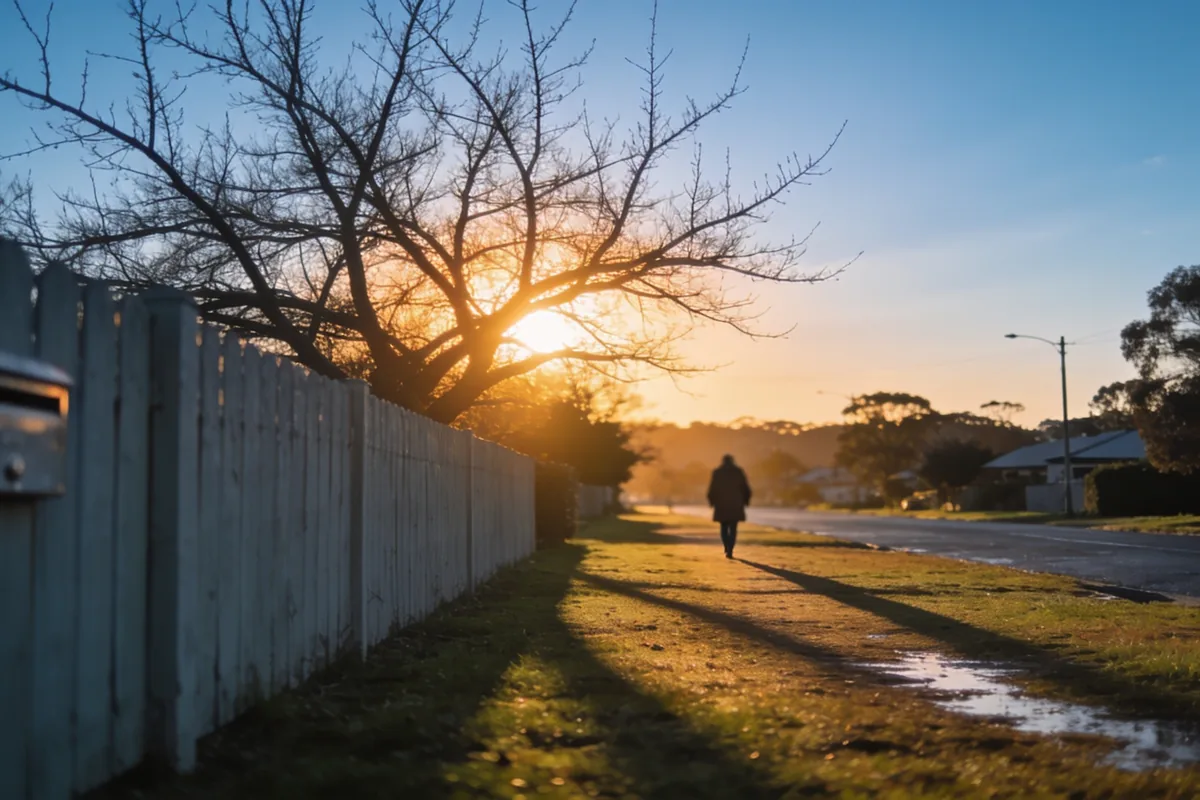
At 4.53 on a Sunday afternoon in June, the light in Sydney gives up. The sun has been sliding down behind the rooflines for an hour, the light has that thin, sideways quality it only has in June, and the clouds over the railway line have gone the colour of a cold peach. The streetlights are on while people are still walking home from the shops. A woman in a puffer jacket crosses at the lights with a bag of groceries and the afternoon closes behind her. Two kids in school jumpers are still kicking a ball on the corner, chasing the last of the light the way you do in June, and by five past five the street is dark enough that the ball is hard to see. It is the middle of the afternoon and the day is already over. This is the year’s shortest day, and it turns on Sunday 21 June at 6.24pm.
The moment arrives in the dark, which is the first strange thing about it. By the time the solstice lands, the sun has been down for an hour and a half. The turning point of the daylight year comes and goes while the kettle boils.
Inside the houses along the street, the day has its own shape. The kitchen light goes on at five, the hallway is dark by half past, and the dog gets its walk under the streetlight whether anyone likes it or not. Winter afternoons are small indoors, and the year’s shortest one is the smallest of them.
The moment itself
The June solstice is the instant the sun sits at its lowest point in the southern sky, which is a formal way of saying the day the southern hemisphere leans furthest away from it. It is the far end of the year’s light, and 2026 puts it at 6.24pm on Sunday 21 June, eastern Australian time.
The tilt is the whole of it. The southern hemisphere leaning furthest from the sun is the reason the day is short, and the same tilt is the reason the northern hemisphere marks its longest day of the year at the same moment. The solstice is a moment rather than a stretch of time. The day around it is what you live in: nine hours and fifty-three minutes of light in Sydney, gathered into the middle of the day.
What the instant does to the day is easier to feel than to explain. In Sydney the sun comes up at 6.59am and sets at 4.53pm, which is 9 hours 53 minutes and 49 seconds of daylight. The light starts late and finishes early, and the middle of the day holds most of what there is. The evening arrives in the middle of the afternoon, and the sunglasses stay in the drawer.
It helps to know what the short day is measured against. The same tables measure the June day at 4 hours and 31 minutes shorter than the December solstice, which is the size of the difference a Sydney year runs through. That is the swing the city lives inside: half a working day of daylight, lost and found again, every twelve months. The light does not vanish in June. It narrows, and it gathers itself into the middle of the day.
The week around the date sits on a plateau. The shortest day is barely longer than the one before it, and the day after is longer by less than a second, which makes the solstice less a turning point and more the flat bottom of a curve.
For the hemisphere, the timing is not a coincidence: in locations south of the equator, the shortest day of the year falls around this date, so the same Sunday is shared from Sydney to Hobart and beyond.
Two cities, two shortest days
On the same Sunday, Hobart gets a shorter day than Sydney. The sun rises in Hobart at 7.41am and sets at 4.42pm, which is 9 hours and 50 seconds of daylight against Sydney’s 9 hours 53 minutes 49 seconds.
The gap is not about who is further east. Latitude decides the length of the shortest day, and the further south a city sits, the more of its light it pays for in winter. Hobart gives up almost 53 minutes of daylight to Sydney on the same Sunday, which is the difference between an evening that ends while it still feels like afternoon and an evening that ends while you are still working. It is the southern cities that pay most for the shortest day, which is the trade latitude sets.
In Hobart the sun is gone by 4.42pm, which is the other half of the same picture: the daylight total is nine hours and fifty seconds, and the last of it leaves early in the afternoon.
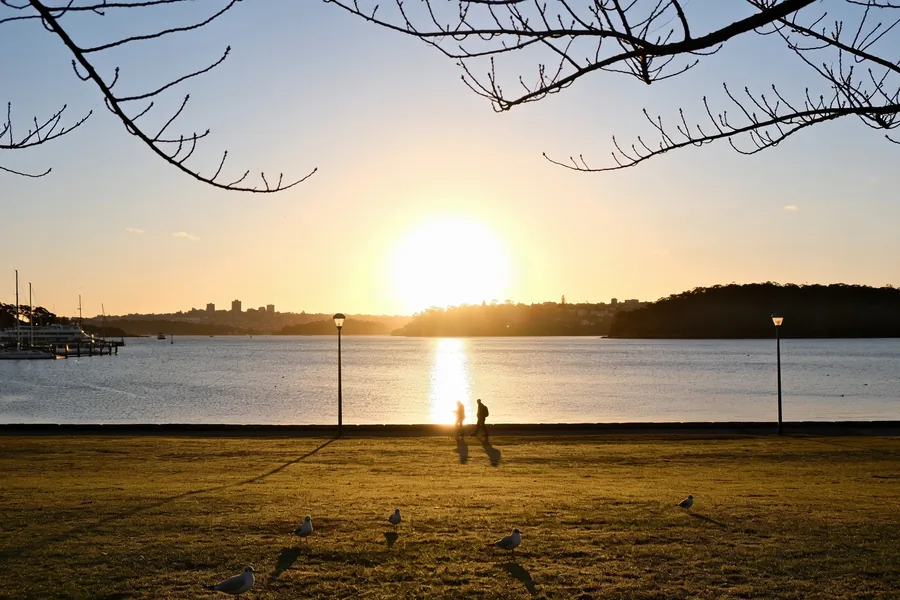
For a reader in either city, the number has a use beyond trivia. It is the floor the year stands on, and everything after it is an improvement, measured in seconds. The same floor applies to a garden, a balcony or a lunch break: whatever the light has been doing, it has finished getting worse.
If the sky and the coast are the part that holds your attention, the site’s long view of what changes on the Australian coast by 2050 works in the same spirit as this day does: slowly, on a schedule nothing can hurry. This piece moves in seconds. That one moves in decades.
Tomorrow is longer, barely
Here is the part nobody tells you, and it is the reason this day carries a whole article rather than a line in a calendar. The shortest day ends, the year tips, and the next day is longer by less than a second.
The tables put 21 June’s daylight at 9 hours 53 minutes 49 seconds and 22 June’s at 9 hours 53 minutes 50 seconds, a gain measured in a single heartbeat of extra light. The year’s turning point arrives and nothing changes yet. There is no moment on the Monday when you notice, no shift in the afternoon, no switch thrown at 6.24pm on the Sunday while you are inside with the heater on.
The change is real, it is relentless, and it is also the least dramatic event of the calendar year, which is exactly why it goes unremarked. Two days later, the difference is still too small to perceive. That is the scale of the turning point, in practice.
What you have instead is a direction. From here the days lengthen, slowly at first and in amounts too small to feel, and it is the direction the date gives you, more than any measurable gain.
And the direction is the part that lasts. The arithmetic keeps running after the solstice has been forgotten, and the day keeps lengthening while nobody is watching.
Why the number is worth knowing
The solstice is the one day of the year that people stand outside for, even though nothing happens that you can see. They stand there because it is the turn, and because a number makes the turn real. The mark of the day is not an event; it is a direction with a date attached, and the date is the part you can write down.
Take a photo from the same spot in the garden, or the same corner of the park, at the same time each evening this week, and you have a record of the year’s flat bottom. Keep the habit and you have a record of the turn.
The habit has a long half-life. A photo taken from the same spot at the same time each week through winter turns into a record of the season’s turn, and the flat week in the middle of it is the frame that makes the rest legible. The photo does not need to be good. It needs to be from the same spot, at the same time, which is the only discipline the record requires. There is something quietly satisfying about holding the two side by side, with a second of extra light between them.
There is a smaller pleasure in it too. Once you know the shortest day is 9 hours 53 minutes in Sydney and 9 hours in Hobart, the winter stops being a vague grey sentence and becomes a quantity. It has a bottom, and you have just seen it. The season ahead can be measured, and the part that has already happened has a number attached to it.
What to do with the week
The practical version of a solstice is simple: the daylight that is left sits in the middle of the day, so put the things that need light there. The lunchtime walk is the walk that still happens in sun. Outdoor jobs get done in the middle of the day, not on the way home, because the way home is dark now.

There is a version of the week that works with the light rather than against it. Move the afternoon run to lunchtime, take the meeting outside if the day allows, and save the jobs that need seeing for the middle of the day. The dark end of the afternoon suits the things that never needed daylight anyway. In June, the hours that still have light in them are the hours to plan around.
That last part needs saying without drama. The evening commute being in the dark is a fact of the calendar in late June, not a warning, and it looks after itself as the year turns. If the darkness is the part that bothers you most, the site’s short break in Brisbane is the winter-north option for a reader whose complaint this month is the light.
When the light starts coming back
Skip the solstice apps and the sunset countdowns. The time of the sunset in Sydney will not tell you anything the date has not already told you, and the countdowns measure a change of a second or two a day, which is not a change you can feel. Skip the argument about whether winter started on 1 June or on the solstice; both are conventions, and neither changes what your garden does next month.
And skip the idea that anything happens at 6.24pm. The solstice is a line in a table, drawn at a moment you will not be standing outside for, in the dark, with the heater on. There is no ceremony the sky performs, and nothing to see, which is why people photograph it instead: a photo is something to hold on to when nothing else happens.
The date also answers the question people ask in July, which is why the evenings are still dark. They are dark because the year is only a few weeks past its floor, because the light is still small, and because the arithmetic of the next month is already running. Knowing where the bottom is also makes the grey weeks afterwards easier to measure.
The two useful facts are the ones you can carry into the rest of the month: 21 June is the bottom, and from 22 June the days get longer. The turn is small and it is real, and it arrives on the Sunday evening while the kettle boils. The light starts coming back the day after the shortest day, and it starts quietly.
Sources: timeanddate.com – Sunrise and sunset times, Sydney, June 2026 · timeanddate.com – Sunrise and sunset times, Hobart, June 2026



 Healthcare1 year ago
Supported Independent Living Explained: What SIL Covers and Who It Suits
- Food1 year ago
Balance Your Plate, Boost Your Mood: Beginner’s Guide to Eating Well
- Healthcare1 year ago
Oral Health at Every Age: What Changes and What to Watch For
- Healthcare1 year ago
The Allergy You Can’t See: How to Detect and Manage Silent Food Reactions
- Healthcare1 year ago
Occupational Therapy for Children: The Signs It Could Help, and How to Start
- Business1 year ago
Connections That Count: Why Networking Is Still Crucial for Business Success
- Healthcare1 year ago
Home and Living Support Under the NDIS: What It Funds and How It Fits a Plan
- Healthcare1 year ago
Tired of Plantar Fasciitis Pain? Shockwave Therapy Could Help You Get Back on Your Feet