Healthcare
The Allergy You Can’t See: How to Detect and Manage Silent Food Reactions


If you’ve ever been told that your tests are clear while your body is telling you otherwise, you know how lonely that feels. Nothing is wrong on paper, so nothing is wrong, except that something clearly is. Delayed reactions to food are one reason that gap appears, and they’re worth understanding properly, because the internet is full of confident answers and almost none of them are yours. This article covers what the delayed pattern looks like, why standard tests can miss it, and the careful way to investigate it with a professional rather than in the dark.
The two patterns, in broad terms
Food reactions broadly fall into two patterns, and the difference between them is the reason so many people get missed.
The classic pattern is fast and often obvious. A reaction arrives within minutes of eating, the symptoms are recognisable, and the standard allergy tests are designed around exactly this pattern, which is why they tend to catch it.
The delayed pattern is slower and quieter. Symptoms arrive hours later, sometimes the next day, and they build up gradually rather than announcing themselves. The mechanisms involved, and how a person’s history and symptoms should be assessed, are clinical questions rather than internet ones, and the general picture here follows the framework that ASCIA, the peak body for clinical immunology and allergy in Australia and New Zealand, publishes for clinicians and patients.
The important point for you is not the biology. It is that a clear test does not mean your symptoms are imaginary. It means the test was not asking the question your body is answering.
What a delayed reaction can look like
The symptoms people describe cover a wide range: digestive discomfort, bloating, changes in bowel habits, skin flare-ups, headaches, fatigue, and a general sense of feeling worse after eating without being able to say why. None of those is specific to food. Each has other possible causes, from stress to sleep to a health condition that has nothing to do with dinner.
That overlap is exactly why guessing is unreliable and why the investigative method below matters. A single symptom is usually not a clue. A pattern is.
Why it is worth a diary before a diagnosis
Before changing anything about what you eat, it is worth writing things down, because the diary is the raw material a professional will work from.
A food-and-symptom diary sounds fussy and takes minutes a day. Write down what you ate, when, and when you noticed any symptoms, along with anything else that might matter: sleep, stress, exercise, and where you are in your cycle if that applies. The pattern you are looking for is not proof of anything on its own. It is evidence that turns a vague story into something a GP or dietitian can actually assess.
The other reason to keep one is that it slows the leap from “I think it is X” to “I have removed X forever”. The leap is tempting and it is often wrong, and the diary makes it easier to test carefully later.
Why an elimination diet is not a solo project
An elimination diet, done properly, has two halves: removing suspected foods for a period, with professional guidance, and then reintroducing them in a planned way so the reaction can actually be identified. The reintroduction is the diagnostic part. Without it, removing foods proves nothing about which one mattered, and it leaves you eating a smaller diet with no answer.
There is a second and more serious reason not to run it alone. Eliminating foods strains nutrition and can be genuinely risky if it is done without professional support, especially for children, whose growing bodies have less room for a restricted diet. That is the caution the confident internet version skips.
So the rule here is simple. Talk to your GP, or to an accredited dietitian, before you cut anything out, and let them help you decide what is worth testing and how. That is not bureaucracy. It is the difference between an investigation and an experiment on yourself.
What the referral pathway looks like
The pathway is usually shorter than people expect. It starts with your GP, who can look at the diary, rule out the other explanations that deserve ruling out, and organise any tests that are genuinely useful. From there a referral may go to an allergist, to a gastroenterologist, or to a dietitian who works with food reactions, depending on what the symptoms suggest.
What to bring to that first appointment is mostly the diary, plus a list of what you have noticed and when, and any tests you have already had. The GP is not going to be surprised by any of it, and you will not be the first person to arrive with a notebook and a long story. Being able to say “here is what I noticed, and here is when” is a genuinely useful thing to bring, and it is far more useful than a diagnosis you found online.
Living with what you find
If an investigation does identify something, the management is usually more workable than it first sounds. Substitutions exist for most ingredients, label reading becomes second nature within a few shopping trips, and eating out simply requires one more question than it used to. The finding is also a kind of relief. A name for the problem is easier to live with than the fog of not knowing.
And where the answer turns out not to be food at all, that is still an answer. The fatigue and low energy that send many people down this road have other causes worth understanding, including chronic conditions where exercise as treatment can play a real part. The point of the investigation is to find the right thread, not to confirm the one you arrived with.
A small step to start with
Tonight, start the diary. Write down what you ate today, and how you felt, without changing a single thing about your diet. Do that for a week, then make one appointment with your GP and take it with you.
You don’t need a diagnosis to begin. You need a record, a professional, and a little patience. Your body has been telling you something for a while; this is how you get a proper translation.
Sources: Australasian Society of Clinical Immunology and Allergy (allergy.org.au).






You’re standing at the water’s edge with a crying child, a red welt rising on their leg, and three different people on the sand telling you three different things. Vinegar, says one. Rub it with sand, says another. Someone further up the beach is recommending something you’d rather not repeat. And you’re left holding a hot, upset little person and wondering which of them is right.
If that’s where you are, or where you’re worried you’ll be this summer, take a breath. The confusion is real, and it isn’t your fault. The advice about jellyfish stings in Australia genuinely changes depending on where you are in the country, and most of the remedies passed around on beaches were meant for a different animal, a different coastline, or no animal at all.
The good news comes first. Healthdirect, the government-funded health information service (its jellyfish page was reviewed in October 2024), says most jellyfish stings are painful but not dangerous. And once it’s laid out, the rule is simpler than the beach chatter makes it sound. In non-tropical waters, a bluebottle sting gets a sea water rinse, the tentacles come off, and then hot water. In the tropics, an unknown sting is treated as a box jellyfish: vinegar and hospital. Everything below is that rule, unpacked slowly, with room for the questions you’re probably already asking.
Is it a bluebottle?
Bluebottles are also called the Portuguese man-of-war. Healthdirect says they’re common along the east coast, especially in Queensland and New South Wales, and anyone who has walked the tide line after a windy day on the east-coast beaches where so much of Australia spends its summer has probably seen them: small, bright blue floats like tiny balloons, with long blue tentacles trailing behind.
The sting usually makes itself known. Healthdirect describes intense pain that can last for an hour or more, and a red line on the skin where the tentacle touched, which can last a day or more. That line is often the clue people notice first.
You might be thinking that you didn’t see what stung you, and that’s fair. Plenty of people don’t. A sting in the shallows happens under the water, and whatever caused it is easy to miss.
So here’s a small thing to do: look along the sand nearby. If blue floats have washed up on the tide line, a bluebottle is a likely suspect.
First aid for a bluebottle sting

Here is what healthdirect recommends, in order.
- Wash the area with sea water, not fresh water. Use the water you’re standing next to.
- Remove any tentacles. You can pick them off with your fingers, or wash them off with more sea water.
- Put the stung area in hot water. Healthdirect gives the temperature as 45 degrees C, for 20 minutes. Make sure the water is not so hot that it will burn. Test it with your own hand before the stung limb goes in.
- If you can’t get a tub of hot water, use a hot shower or hot running water instead.
Healthdirect is clear that hot water works better than ice packs for bluebottle pain. That might surprise you if you grew up putting ice on everything, and it’s okay to feel a bit wrong-footed by it. The evidence is there, though.
The Royal Australian College of General Practitioners includes topical heat for bluebottle stings in its Handbook of Non-Drug Interventions, known as HANDI. The recommendation is based on a randomised trial, rated at NHMRC Level 2 evidence. HANDI adds some practical cautions that are worth knowing before you start. The heat needs to be applied quickly to help. Some people find they can’t tolerate the temperature. And there has been one thermal burn recorded, which is exactly why checking the water before a stung limb goes in matters so much.
If your child can’t bear the water at first, that’s understandable. Let them lower the limb in slowly, and keep a hand nearby to test that it’s warm rather than scalding.
If you’d like one thing to do before your next beach day, make it this: if there’s a café, a surf club or a shower block nearby, find out where the hot water is before anyone goes in.
Why not vinegar, here
This is the part that trips most people up, so please don’t feel silly if you’ve always reached for the vinegar. Plenty of us were taught that, and for some stings in some places, it’s right. For a bluebottle, it isn’t.
Healthdirect says vinegar may increase the pain of a bluebottle sting. HANDI goes further and lists the things that may trigger more discharge from the stinging cells: alcohol, vinegar, and rubbing the area with a towel or with sand. So the well-meaning person scrubbing your child’s leg with a handful of sand may be making it worse, not better.
Fresh water is on the same list for a slightly different reason. Healthdirect explains that fresh water can set off stinging cells that are still left on the skin. That’s why the first step is sea water, even though a bottle of drinking water might be the first thing to hand.
And one more thing that sometimes gets mixed up. A bluebottle sting does not need a pressure bandage. That kind of bandage is the right first aid for some bites, including a brown snake bite, but it isn’t used for a bluebottle. If someone on the beach starts reaching for a bandage, you can gently say no.
If you carry a little kit in the beach bag, the change is small. Take the vinegar out of your bluebottle plan, and leave the bandage for the bites it’s meant for.
North of Bundaberg and Geraldton, the rules change
Now for the part that explains why the advice feels so contradictory. Australia has more than one kind of dangerous jellyfish, and they live in different waters.
Healthdirect draws a line across the map. In the north of Australia, north of Bundaberg in Queensland and north of Geraldton in Western Australia, any unknown sting should be treated as a box jellyfish sting. That’s a different situation from a bluebottle on a southern beach, and it needs a different response.
For a major box jellyfish sting, healthdirect’s steps are:
- call 000
- start CPR if the person is unconscious
- remove the tentacles
- pour vinegar on the sting site once the tentacles are off (healthdirect explains that vinegar deactivates the stinging cells)
- use ice packs for the pain
- get to hospital
So vinegar does have a place. It just belongs to the tropics and the box jellyfish, not to the bluebottle on a southern surf beach.
There’s also Irukandji syndrome to be aware of. Healthdirect explains that symptoms can begin 20 to 30 minutes after a sting, and the sting itself may not even be noticed. The symptoms include severe pain in the back, chest and muscles, a fast heart rate, high blood pressure, anxiety and nausea. If that happens after swimming in tropical waters, go to hospital.
Stinger season usually runs from late spring to early autumn, although it varies from place to place. If you’re holidaying up north, ask the locals and the lifeguards what the season looks like where you’re staying.
The step to hold on to up north is the simplest one. If anyone is stung in tropical waters, call 000. You don’t need to be sure what it was first.
When a bluebottle sting needs a doctor
Most jellyfish stings are painful rather than dangerous, as healthdirect says. Still, it’s completely reasonable to want to know when to stop managing it yourself.
Healthdirect suggests seeing a doctor if:
- the pain is severe and isn’t getting better, or other symptoms appear
- blisters form that need dressing
Rarely, healthdirect says, a bluebottle sting causes abdominal pain, muscle pain or breathing problems. That happens in fewer than 1 in 100 people. It’s uncommon, but it’s worth knowing the signs. If anyone has difficulty breathing, call 000 straight away.
If you’re simply unsure and want advice, the Poisons Information Centre is on 13 11 26. You can call them from the beach, and it’s okay to ring even if you think you might be overreacting. That’s what the line is for.
Something you can do in the next minute: save 13 11 26 in your phone, alongside 000, so you’re not searching for it with a crying child on your hip.
Keeping the day on track
None of this needs to put you off the beach. A few habits make a sting less likely, and much easier to handle if it does happen.
- Swim at patrolled beaches. Lifeguards can give first aid, and they’re the people to ask about what’s been washing in.
- Stay out of the water when warnings are up. If the beach has stinger warnings, it’s fine to have a sandcastle day instead.
- In the north, wear a full-body suit or a stinger suit when you swim.
- Don’t touch jellyfish on the sand, including bluebottles that look washed up and harmless. Teach the kids to look and not poke.
It helps, too, to pack the beach bag with the whole day in mind. Hats and sunscreen go in first, and if you’ll be staying into the evening or heading on to a campsite, the right mosquito repellent for where you're going belongs in there as well.
And a gentle last step for this section: next time you’re at a patrolled beach, point out the flags and the lifeguards to your kids, so they know where to go if something stings.
Sea water, hot water, and a lifeguard
If you take nothing else away, take this. For a bluebottle sting on a non-tropical beach, rinse with sea water, take the tentacles off, and put the area in hot water at 45 degrees C for 20 minutes, checking first that it won’t burn. Skip the vinegar, skip the fresh water, skip the sand, and skip the bandage.
North of Bundaberg and Geraldton, treat any unknown sting as a box jellyfish: call 000, remove the tentacles, use vinegar, and get to hospital.
And wherever you are, swim where there’s a lifeguard. You don’t have to remember every detail of this when it happens. The people in the red and yellow will, and they can help you take it from there.
Sources: Jellyfish stings, healthdirect (https://www.healthdirect.gov.au/jellyfish-stings); Topical heat for bluebottle stings, RACGP Handbook of Non-Drug Interventions (https://www.racgp.org.au/clinical-resources/clinical-guidelines/handi/a-z/t/topical-heat-for-bluebottle-stings)


NSW Health identifies three active ingredients as the most effective topical mosquito repellents: DEET, picaridin and oil of lemon eucalyptus. Repellents containing them are registered with the Australian Pesticides and Veterinary Medicines Authority, which NSW Health says checks that products are safe and effective, and the active ingredient is listed on the label. Within those conditions, the choice of product depends less on the brand than on three questions: where the repellent will be used, who will wear it, and for how long. The helper below works through those three questions and returns a plain summary drawn from NSW Health guidance. It is general information and not medical advice.
Which repellent approach fits your trip?
Answer three questions and get a plain summary based on NSW Health guidance. This is general information, not medical advice.
Choose one answer to each question. The summary needs JavaScript to appear.
Answer the three questions, then choose Show my summary.
What a mosquito repellent does
A repellent does not kill mosquitoes. NSW Health explains that it works by confusing the mosquito’s senses, so that the insect does not find the skin it would otherwise bite. That mechanism carries a condition that is easily overlooked: a repellent protects only the skin to which it has been applied. An uncovered ankle or a missed patch on the neck receives no protection from the product on the arms.
The method of application follows from this. NSW Health advises applying a thin, even layer to exposed skin, rather than misting it into the air around the body. Since the product protects only where it lands, the purpose of an even layer is to leave no exposed skin uncovered.
NSW Health also sets out what to avoid. Repellent should not be applied to the eyes, the mouth or broken skin. Where sunscreen is also needed, the order is sunscreen first and repellent second.
The three active ingredients
The three ingredients that NSW Health rates as most effective are DEET, picaridin and oil of lemon eucalyptus. The active ingredient, and its concentration, are listed on the product label, and the label is the document that governs how the product is to be used.
| DEET | Picaridin | Oil of lemon eucalyptus | |
|---|---|---|---|
| Rated by NSW Health among the most effective topical repellents | Yes | Yes | Yes |
| Product must be registered with the APVMA to be sold in Australia | Yes | Yes | Yes |
| Directions for age, quantity and reapplication | On the label | On the label | On the label |
The table is deliberately limited to what the authorities state. On the matters that people most often discuss when comparing these ingredients, such as how a product feels on the skin, how it smells, and how it interacts with clothing or equipment, this article makes no factual claim. Those are questions of personal preference, and a reader who has a preference on any of them may choose accordingly from among the three.
Oil of lemon eucalyptus should not be confused with eucalyptus oil in general. NSW Health lists eucalyptus among the natural repellents that provide very limited protection, while oil of lemon eucalyptus is among the three it rates most effective. The label states which is present.
Strength and time
NSW Health states that a higher concentration of active ingredient gives longer protection. The statement concerns duration: the relevant question for the buyer is how long the product must last before it can be reapplied, and the label is where the manufacturer states that period for the particular product.
Reapplication is governed by the label. NSW Health advises reapplying as the label directs, and more often where the person is sweating or after swimming, since both remove the product from the skin. A product chosen for a short evening in the backyard and a product chosen for a full day outdoors may therefore differ, not because one ingredient is superior, but because the second situation calls for protection that lasts longer between applications.
This article does not state particular concentrations or hours of protection, because those figures vary between registered products and are set out on each product’s label.
Choosing by setting
The setting determines how long a person will be exposed, at what time of day, and whether any disease risk is involved. NSW Health notes that mosquitoes are most active at dawn, at dusk and in the evening.
The backyard or a local park. For a short period outdoors at dusk, a registered repellent applied to exposed skin, in a thin and even layer, meets the need. The yard measures set out later in this article reduce the number of mosquitoes present in the first place.
A day walk, a campsite or the beach at dusk. For longer periods, NSW Health advises combining repellent with clothing. Long, loose and light-coloured clothing covers the skin that repellent would otherwise have to protect. A higher-strength product, reapplied as the label directs, suits a day outdoors. Those spending the warmer months in the bush should also be aware of the other hazards of the season, including brown snakes in spring.
Overnight outdoors. NSW Health travel advice recommends sleeping under a bed net, ideally one treated with permethrin, or in a screened or air-conditioned room. The treatment referred to here applies to the net, and this article gives no advice on applying permethrin to the skin.
Northern Australia and travel to the tropics. Some destinations carry a risk of mosquito-borne disease. NSW Health advises avoiding areas with known outbreaks. The question of disease risk is a medical one, and the appropriate course is to see a general practitioner or a travel doctor before departure and to read the Smartraveller advice for the destination. A traveller planning a trip to one of the eco-friendly destinations in the tropics should allow time for that appointment before the date of travel.
Children
NSW Health states that most repellents are safe for children aged three months and older when used as directed, and that some formulations are recommended only from 12 months. The label states which applies to a given product, and it should be read before the product is used on a child.
Responsibility for application rests with the adult. NSW Health advises that adults apply repellent to children rather than allowing children to apply it themselves. For a day out, that means applying it in the morning and again as the label directs.
For babies under three months, this article does not recommend a repellent. Physical protection is the appropriate measure: a fine net over the pram or cot, and light clothing that covers the arms and legs. Any question about using a repellent on a baby of that age is a question for a general practitioner.
What does not work
NSW Health is explicit that several products sold for mosquito protection do not provide effective protection. These include wristbands, patches, ultrasonic devices and phone applications. A person relying on any of them should not assume that they are protected.
NSW Health also states that natural repellents, such as citronella, eucalyptus and tea tree, provide very limited protection. They may be pleasant to use, but they should not be relied on in place of a registered product containing one of the three ingredients named above, particularly where disease risk is present.
Around the house
The most effective measure around the home is to remove the water in which mosquitoes breed. NSW Health sets out a series of steps, summarised here.
- Empty containers that collect water, along with bird baths and pet bowls.
- Fill the bases of pot plants with sand, so that water does not pool in them.
- Keep gutters clear, so that water drains rather than stands.
- Fit screens to windows.
These measures are the responsibility of the householder, and they reduce exposure for everyone in the house, including those too young to wear a repellent.
After a bite
For an ordinary bite, NSW Health advises washing the area, applying ice to reduce swelling, and using an antihistamine cream as the label directs.
Certain symptoms call for more. NSW Health advises that a person who develops a rash or flu-like symptoms after being bitten should see a doctor. In an emergency, call 000.
The label is the instruction
Each of the questions in this article returns, in the end, to the same document. NSW Health directs that approved products be used as the label states, and notes that the proven repellents are registered with the APVMA. The label therefore carries two kinds of information at once: the active ingredient that places the product among the three NSW Health rates most effective, and the directions on age and reapplication that govern its safe use. A reader who has chosen by setting, by age and by hours outdoors still has to confirm that the particular product in hand suits the person who will wear it.
The responsibility for that confirmation rests with the buyer, and for children with the adult applying it. A product that suits one member of a household may not suit another, and a product chosen for a backyard evening may not be the right one for a weekend under canvas.
The guidance in this article reduces to a set of conditions, each drawn from NSW Health and each applied through the product label.
- Choose a registered product containing DEET, picaridin or oil of lemon eucalyptus.
- Read the label for the ages the product suits and how often it must be reapplied.
- Apply sunscreen first and repellent second, in a thin and even layer, away from the eyes, the mouth and broken skin.
- Reapply sooner after sweating or swimming.
- For children, apply it yourself. For babies under three months, use nets and clothing, and ask a general practitioner.
- For travel to areas with mosquito-borne disease, see a doctor before departure and check Smartraveller.
- Do not rely on wristbands, patches, ultrasonic devices or phone applications.
A product chosen on these conditions, and used as its label directs, is the protection the authorities describe.
Sources: Mosquito borne diseases: Bite prevention, NSW Health (https://www.health.nsw.gov.au/Infectious/mosquito-borne/Pages/bite-prevention.aspx)

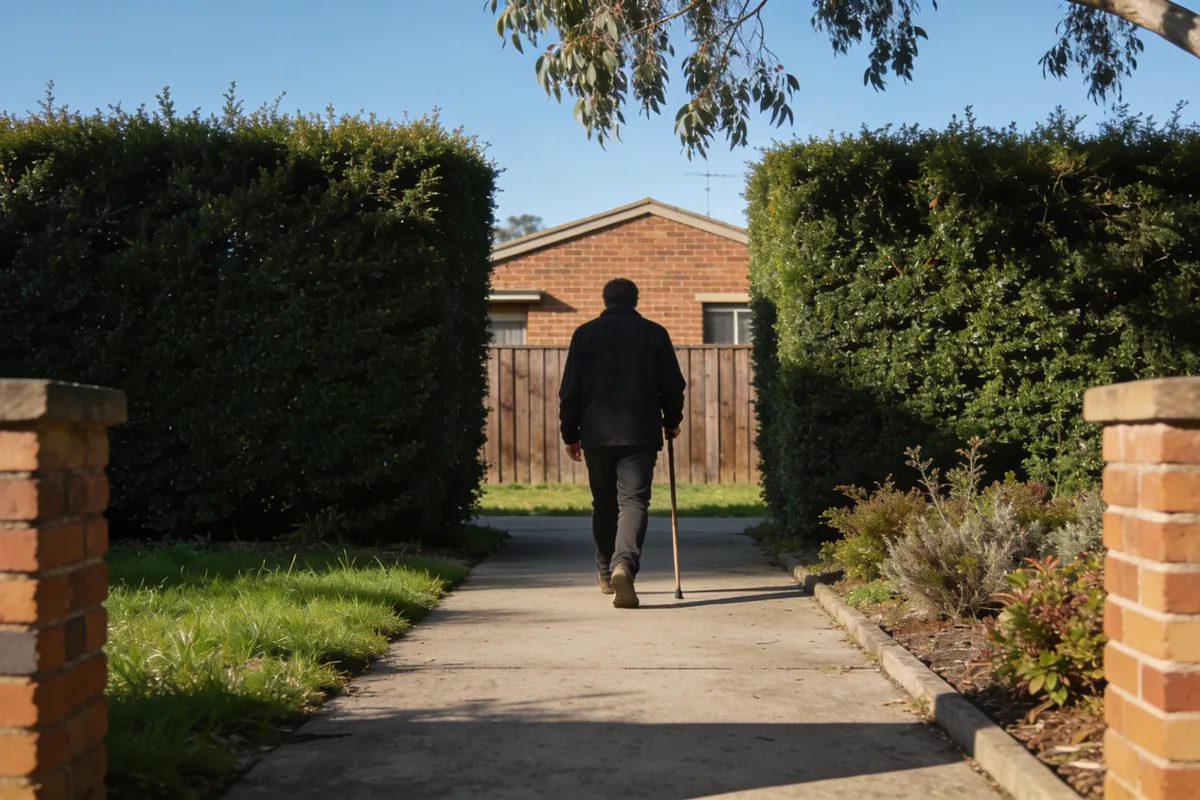
Exercise physiology is the allied health profession that treats exercise as medicine: prescribed, progressed and reviewed like any other therapy. For participants in the National Disability Insurance Scheme, it sits among the capacity building supports, funded where it helps a person build or maintain the physical capacity their goals depend on. This article covers what the profession does, how the funding works, what a first assessment involves, and what to look for in a provider.
What exercise physiology is
An exercise physiologist is a university-qualified allied health professional who uses exercise to improve how a body functions. Accredited practitioners are registered through Exercise and Sports Science Australia, and the accreditation is the credential worth checking. Where a personal trainer designs programmes for people who are well, an exercise physiologist works with people whose condition or disability changes how exercise must be prescribed, and does so within a treatment plan that the rest of the care team can see.
The comparison with physiotherapy is worth a line because the two are often confused. Physiotherapy works on injury, movement and rehabilitation, often with hands-on treatment. Exercise physiology works on capacity and condition management through prescribed exercise, and the two overlap at the edges, which is a reason they are often funded together rather than instead of each other. This article stays with the practical question of starting; the chronic-illness angle is covered in its own article.
How participants access it
The support is requested in the plan, under the capacity building category, and the request connects the exercise physiology to the participant’s goals: building strength for transfers, maintaining mobility, managing a condition that affects daily function, or improving the fitness that community participation requires. The evidence for the request is the same as for other capacity building supports: what the participant needs to do, what the current capacity is, and what the therapy is expected to change.
Who can set the process in motion is broader than many people expect. A general practitioner can refer and prepare a care plan, a specialist or treating team can refer, and a support coordinator can help assemble the request where one is funded. What the plan then allows in terms of providers depends on how the funding is managed: agency-managed plans must generally use registered providers, while self-managed and plan-managed budgets can use providers who are not registered, provided the support itself meets the scheme’s rules.
What a first assessment involves
The first appointment is an assessment, and it establishes both what the participant can currently do and what is safe to prescribe. The physiologist takes a history, including the disability, any other conditions, medications and previous experience with exercise, then measures a baseline: strength, mobility, balance and how the body responds to effort. The measures are chosen for the person, so a participant with limited mobility is assessed on what matters for their situation rather than against a standard gym test.
The participant can prepare for it by bringing the plan and any recent reports, and by being able to say what a good outcome would look like. A goal such as getting in and out of a car without help, or walking to the letterbox and back, gives the assessment something concrete to build towards, and the programme is written from that.
It is worth saying what the assessment is not. It is not a test the participant can fail, and it is not a comparison against a fitness standard; the baseline it establishes is personal, and the only comparison the programme cares about is against that baseline at the next review. A participant who arrives worried about being judged is arriving with the wrong model, and a physiology practice worth its accreditation does not run assessments that way.
How sessions are funded and reviewed
Sessions are drawn against the funding in the plan, and the scheme publishes price limits for the support, so the charges a provider makes should be traceable to the current published arrangements rather than set by the provider alone. That is a fair question to raise before booking, and a provider who answers it plainly is doing the basic thing the scheme expects.
The review runs on the same evidence as the request. Progress against the baseline is recorded, the goals are revisited, and the reports the physiologist writes are what a plan review relies on. A participant who keeps their own note of what has changed since the programme began arrives at the review with something to show, which is more persuasive than a recollection.
What progress looks like
Progress in exercise physiology is measured in function rather than in gym numbers, which is why the baseline assessment matters so much. The first changes are usually the quiet ones: a task completed without stopping, a shorter recovery after effort, a movement that used to require help now done alone. Strength and endurance come with them, and so does a change the participants themselves often name first, which is confidence.
That confidence is part of the treatment, not a side effect of it. A person who has learned that their body tolerates effort is a person more willing to attempt the things a plan is trying to achieve, and the physiological and the psychological gains reinforce each other.
Across ages and abilities
Programmes are adapted rather than standardised. A child and an older adult work on different goals with different equipment, a participant using a wheelchair trains the strength that transfers and propulsion require, and a person managing fatigue learns how to pace rather than push. The constant across all of them is the structure: assessment, prescription, progression and review, with the exercise adjusted as the person changes.
Keeping the programme going
The results of exercise physiology come from consistency rather than intensity, and consistency is a logistics question before it is a motivation question. The sessions that happen are the ones that fit the week: a time that does not collide with work or care responsibilities, a location that can be reached without a difficult trip, and equipment that suits the participant’s capacity on an ordinary day rather than their best one. A programme built around ideal conditions is a programme that stops in the first difficult month.
Support workers, family members and support coordinators can all make a practical difference here, whether by helping with transport, by joining part of a session to continue the routine at home, or by keeping the schedule protected when other commitments compete. Where motivation dips, the useful response is to reduce the session rather than cancel it, because a shorter session maintains both the physical adaptation and the habit, and the review point is the right place to discuss changing the plan rather than abandoning it quietly.
Choosing a provider
The checks that apply to any provider apply here. Where the plan is agency-managed, the provider’s registration with the NDIS Quality and Safeguards Commission can be checked on its public register. The individual practitioner’s accreditation is checked through Exercise and Sports Science Australia. Beyond the paperwork, ask what experience the provider has with the participant’s disability or condition, how programmes are progressed and reviewed, and who delivers the sessions. The four checks before committing to a provider set out the general version of that list, and a provider who welcomes the questions is usually the one worth choosing.
Getting started
The pathway is not complicated. Confirm the referral route, whether that is a general practitioner, a treating team or the plan itself, and establish how the funding is managed so the provider list is clear. Book the assessment, bring the plan, and expect the programme to be written from the baseline rather than from a template. The first goal of the therapy is a person who can do more of what their plan is for, and the way to get there is unglamorous: prescribed exercise, progressed carefully, reviewed honestly.


 Healthcare1 year ago
Supported Independent Living Explained: What SIL Covers and Who It Suits
- Food1 year ago
Balance Your Plate, Boost Your Mood: Beginner’s Guide to Eating Well
- Healthcare1 year ago
Oral Health at Every Age: What Changes and What to Watch For
- Healthcare1 year ago
Occupational Therapy for Children: The Signs It Could Help, and How to Start
- Healthcare1 year ago
Home and Living Support Under the NDIS: What It Funds and How It Fits a Plan
- Business1 year ago
Connections That Count: Why Networking Is Still Crucial for Business Success
- Healthcare1 year ago
When Everyday Tasks Get Hard: What an Occupational Therapist Can Do
- Healthcare1 year ago
Tired of Plantar Fasciitis Pain? Shockwave Therapy Could Help You Get Back on Your Feet