Travel
Brisbane in a Few Days: Seven Stops Worth Your Time


You’ve got a few days in Brisbane and a list that’s quietly grown to twelve entries, which is usually the moment a holiday starts to feel like homework. Here is a kinder way to plan it. The stops below are grouped by how you would actually use them: one half-day by the river, one morning on the mountain, one full day out at the sanctuary, and the bridge climb for the evening you want to remember. Take the ones that fit, leave the rest for next time, and let the city be a place you’re in rather than a list you’re completing.
The river half-day
South Bank Parklands
South Bank is the obvious first stop and it earns the reputation. A public parkland along the water, with the man-made beach, gardens, and a promenade that runs for kilometres in either direction, it works for a slow first morning or a late afternoon when the light softens over the skyline.
Allow half a day. Come before the middle of the day in summer, or in the late afternoon, and bring nothing more than walking shoes and a water bottle. It is a short walk over the bridge from the city centre, and everything in the parkland is free, which makes it a forgiving place to spend the first few hours of a trip. If you want the beach rather than the view of it, the man-made lagoon at Streets Beach is right there.
Gallery of Modern Art (GOMA)
GOMA sits in the cultural precinct at the South Bank end of things, a short stroll from the parklands, and it is one of the country’s big contemporary art galleries. The exhibitions rotate, the building is worth seeing in its own right, and the Children’s Art Centre makes it a genuinely family-friendly stop rather than a polite one. Entry to the gallery is free, with ticketed special exhibitions when they are on, so check the program for your dates. Allow an hour to browse and longer if the art grabs you.
The City Botanic Gardens
At the city end of the river, the City Botanic Gardens are the old, quiet counterpart to South Bank’s busy stretch. The paths wind through mature trees and along the water, and the whole thing takes an hour or so to wander at an unhurried pace.
The practical move is to walk from the city through the gardens and then follow the river to South Bank, joining the two stops into one loop. The best time is early, when the gardens are at their coolest and the river has a little mist on it, and the walk needs no planning beyond a hat.
The Brisbane Riverwalk
The Riverwalk is the city’s floating path, a walkway over the water itself that strings the river together, from the city and South Bank through to Howard Smith Wharves and on towards New Farm. It is the best way to see the river without getting on it: walk it, jog it, or take a bike, passing beneath the Story Bridge with the Kangaroo Point cliffs rising at the water’s edge.
Allow about an hour for the main stretch, more if you stop for coffee at a riverfront café. Early morning and sunset are the pick of the times, and the ferry is the easy way back when your legs have had enough. Look down as you go: the kayakers and paddleboarders below are on the same idea, one level closer to the water.
The morning on the mountain
Mount Coot-tha Lookout
Mount Coot-tha is the city’s own lookout, a short drive or bus ride from the centre, and the view from the top takes in the whole of Brisbane and out to the bay on a clear day. It is the best single orientation you can give yourself: once you have seen the city from up there, the river bends and the suburbs make sense.
Come early. The lookout works best before the tour buses arrive and before the haze builds, and a morning there pairs well with breakfast on the way back down. You can reach it by car, taxi or bus; if the bus, check the current timetable before you go, because the service is limited on weekends.
The day out at Lone Pine
The koala sanctuary
Lone Pine is the stop that puts you close to the animals, with koalas, kangaroos and a working sanctuary rather than a zoo. It is the one stop on this list that really does take a full day, once you count the travel at both ends, and it is worth treating it as the trip’s main event rather than something squeezed between two others.
Book ahead, and check the sanctuary’s current experiences when you do, because what is on offer changes from time to time and it is better to know before you arrive than to discover it at the gate. The general advice is the same as everywhere in Brisbane: mornings are cooler, and the animals are more active earlier.
Getting there without a car
The journey is part of the fun. The most pleasant way is the river ferry from the city, which turns the trip into a cruise up the river, followed by a short connection to the sanctuary; the alternative is the bus, which is quicker but less scenic. Both are straightforward, and both need their current times checked with the operator on the day, so build in a little slack rather than sprinting for a connection.
The bridge climb
Story Bridge Adventure Climb
The Story Bridge is Brisbane’s own bridge, and the climb up it is the city’s signature experience: a guided walk over the arch, harnessed and briefed, with the city laid out beneath you the whole way. It is the one stop on this list that must be booked, and the popular times fill, so book as early as your dates allow.
Day, sunset and night climbs are all offered, and they are different evenings: the daytime for the long views, golden hour for the photographs, night for the lights. It is a climb rather than a hike, but check the operator’s current requirements for footwear and what you can take up with you, and arrive a little early, because the briefing is part of the experience rather than a formality.
The hidden gems
The headline stops are only part of the city. These are the places locals would add to the list, and they fit into the gaps in a trip rather than needing days of their own.
- Kangaroo Point Cliffs. A favourite with rock climbers and sunset watchers alike. Pack a picnic or pick up a coffee from a nearby van and watch the skyline change colour across the water.
- West End. The artsy, multicultural neighbour, full of vintage shops, street art, quirky cafés and a lively weekend market. Good for brunch and better for people-watching.
- Roma Street Parkland. Green, colourful and right in the centre, a quieter garden to wander through or lie on the grass when the day has already been full.
- Kayaking the river. Hire a kayak or join a twilight tour for the city lights reflected on the water, which is a whole different city seen from a whole different angle.
- James Street, Fortitude Valley. Boutique shops, good restaurants and design galleries, for the afternoon that quietly turns into the evening.
Making the days work
Three small practicalities cover most of it. The first is the ferry network, which is the city’s most enjoyable transport and usually the easiest way to get between the river stops; check the current times, because the timetable is the one thing that changes. The second is the weather: Brisbane in summer is hot and humid, so the pattern that works is to be out early and indoors or in the shade by the middle of the day. The third is shoes. This is a walking city at heart, and none of the stops above requires anything more than comfort.
A small step to start with
Pick two blocks from this guide for your first full day, and leave the rest loose. The half-day by the river and the morning on the mountain make a natural first day, and the sanctuary can take the next one. And if your trip might stretch beyond the city, the quieter, nature-first places worth planning around are a good next read for what to look at when the trip grows longer.
Brisbane rewards the unhurried version. You won’t see everything, and you were never going to, so see the parts that suit the mood you’re in.



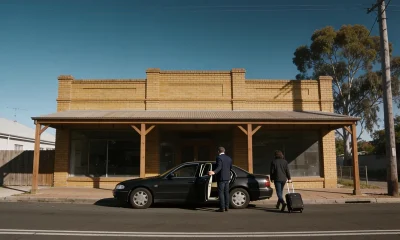











Booking a taxi has become a screen with a map on it, which is an improvement in most respects and a distraction in one: the screen is good at showing you the nearest car and quiet about the things that decide whether the trip works. The trips that matter most are usually the ones arranged in advance for a fixed time, and they reward a conversation rather than a tap. This guide covers where the app stops being enough, what to specify when booking, and what to do when a car does not arrive.
What the app does not do
Digital dispatch has not replaced the taxi so much as changed how it is called, and the gaps are instructive.
What an app does well is the ordinary trip, booked minutes ahead, price visible, car nearby. What it does less well is the committed trip: the 5am airport run that cannot be missed, the hospital appointment at a fixed hour, the return from an event where every passenger in town is booking at once. These need a booking rather than a request, and a booking needs an operator who holds it. The second gap is specification. A passenger who needs a wheelchair-accessible vehicle, extra luggage space or a child seat is stating a requirement, not expressing a preference, and a dispatch system that does not carry the requirement to a specific vehicle cannot be relied on to meet it.
Booking for an appointment or an early flight
The booking for a fixed-time trip has four useful components. The first is the booking itself, made as far ahead as the operator allows, because a small or busy fleet fills. The second is a pickup time with a margin built in for the hour: for a flight, the time the passenger needs to be at the terminal, worked backwards; for an appointment, the same logic with the check-in time in mind. The third is the exact meeting point, which matters more at 5am than at noon, because the front door, the corner and the hotel entrance are three different instructions. The fourth is the return trip, booked at the same time as the outward one where the day will end at a fixed hour.
Two questions settle the rest. Who should the passenger call if the plans change, and what is the operator’s policy on waiting? The answers are worth having before the morning rather than during it.
Accessibility, specified at booking
Where a passenger needs an accessible vehicle or assistance, the requirement belongs in the booking, stated plainly and confirmed back. A reliable operator will assign a suitable vehicle at the time and note the assistance required; a system that cannot confirm the vehicle is not a confirmation. The same applies to mobility aids and luggage: name the equipment and its size so the right vehicle arrives, and ask what assistance the driver can provide at both ends of the trip.
Fares, and knowing the cost before you go
Fares for metered taxis are set under the rules that apply where the trip takes place, and the meter in the vehicle displays what is being charged. The useful habits are two. For a routine trip, ask the operator for an estimate when booking, which the better ones will give for a known route. For a fixed run such as an airport transfer, ask whether a fixed fare applies, and confirm what it includes, because tolls and booking fees are the usual variables. What a passenger should not have to negotiate is the meter itself: it is displayed, and a fare that does not match the display is a matter for the operator rather than the passenger.
If the car does not arrive
A no-show is the failure mode that matters, and the response is procedural rather than panicked. Call the operator first, with the booking reference if there is one, and establish whether a car is coming and when. If the answer is not, ask for the next available vehicle and, where the trip is critical, start the alternative in parallel rather than sequentially: another operator, or the ride-hailing option, whichever can confirm a car first. Then report the failure properly afterwards, because the operator’s record of it is the only thing that changes the next booking.
What to have ready when you call
A booking is only as good as the information in it, and the list is short. The pickup point described precisely, with a landmark if the address is ambiguous, since “the front entrance” and “the back gate” are different instructions at different hours. The time the passenger needs to arrive, rather than only the time the vehicle should come, so the margin is the operator’s problem rather than the passenger’s. A phone number that will be answered on the day. Any requirements the vehicle must meet, from accessibility to luggage. And the payment method, where a card in the vehicle matters, because not every fleet carries one on every shift.
It takes a minute to assemble, and it converts a hopeful call into a booking the operator can actually fulfil and hold.
The return trip
The return is the half that gets forgotten and the half that fails. Where the day ends at a fixed hour, the return trip should be booked with the outward one, because a car that took the passenger somewhere at nine is not automatically available at three. Where the day’s end is uncertain, the conversation at booking is about who to call when the time firms up, and whether the operator prefers a message or a call.
Late at night, the arithmetic changes again: the fleet thins, and the passenger with a booking made in the morning is the one the operator can plan around. For the trips that matter, then, the pattern is the same as it has always been. Book both legs, confirm the vehicle, and keep the number for the hours when the screen has nothing to offer.
Where the rideshare is the better answer
The honest comparison has both columns. A ride-hailing app is usually the better answer for a spontaneous trip where price comparison matters and a car is nearby, and it is often the only answer late at night in areas where taxi coverage thins. A taxi tends to be the better answer where the trip is committed: a pre-booked pickup at a fixed hour, a rank where cars are already waiting, a taxi rank at a station or an airport, an accessible vehicle arranged in advance, or a regional town where the local service is the local knowledge. The choice is not loyalty to one system; it is matching the vehicle to the trip.
The booking decision
The screen is a tool, not a strategy. For the trips that matter, the discipline is the old one: book ahead, state the requirements, confirm the vehicle, know the fare basis, and keep the operator’s number for the day itself. That is the half of taxi travel the app has not replaced, and the other half of the story, what a local service is doing for the town it serves, is set out in what a local taxi service covers.
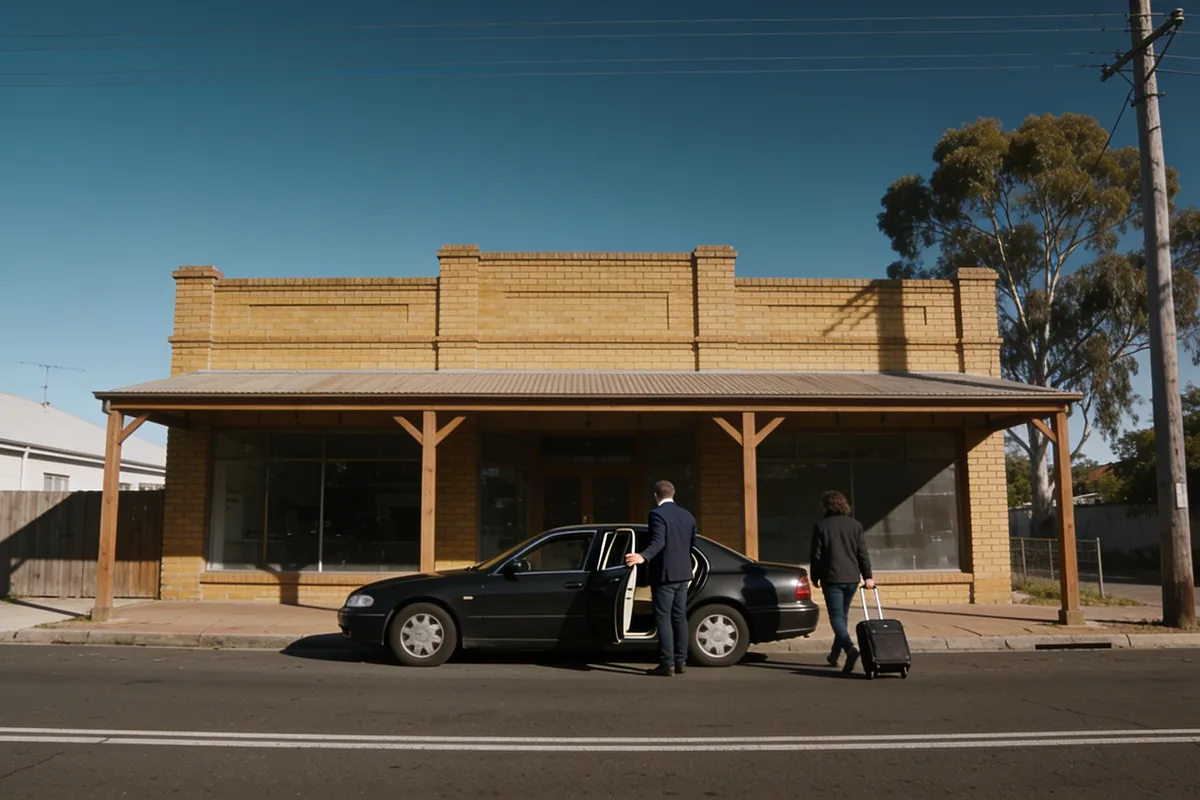
A country town’s transport problem is not that it has none. It is that the services that exist run to their own schedules, and the trips people actually need take place at the edges of them. The first train leaves before the first bus connects, the specialist appointment is on a weekday, the shift ends after the last service has gone. A local taxi service exists in that gap, and the gap is larger than the town’s size suggests. This article sets out what the service is doing in a community, trip by trip, and what a passenger should confirm before relying on it.
The trips a timetable does not cover
Public transport in a regional town is arranged around volume, and the taxi fills in where the volume is not. The pattern of those trips is consistent across towns, and each of them is a journey that otherwise does not happen.
An early flight is the clearest case. The airport run leaves before any connecting service starts, and the passenger who cannot be driven by family needs a car and a driver at the hour the plane requires. A specialist or dialysis appointment is the second: weekday, fixed, often in a larger town or the city, and impossible to reach by a timetable that assumes the middle of a working day. School runs fill the third gap, where the bus stop is right but the timing is wrong. Shift work supplies the fourth, with starts and finishes at the hours the timetable does not serve. And the ordinary evenings, dinners, events and the trip home after both, are the fifth, because a town that cannot get its residents home at night loses the events it worked to put on.
The list matters because each item is a working day in the life of a local operator, and each is a reason a household chooses to keep a car it can barely justify, or to stay home instead.
Who the service carries
The passengers are the town’s own. Older residents who have stopped driving or never did, and who still have appointments to keep. Workers whose shifts do not match a bus. Young people getting to study or a first job. Visitors arriving to a wedding, a winery or a weekend, who need to move around without imposing on their hosts. Each group describes the same thing from a different angle: transport that adapts to the trip rather than the trip adapting to the transport.
The exercise of listing this out is not sentimental. It is the reason a town’s transport infrastructure deserves the same attention as its road maintenance, because the households it serves are the ones that keep the town functioning during the hours when everyone else is asleep.
A working day, from the car’s point of view
The clearest way to see what the service is doing is to follow a day of it. The first booking is before five, a resident to the airport for the early flight. The return leg brings a visitor in from the same flight an hour later. By half past eight the school run has replaced the airport runs, and by mid-morning the car is on the appointment circuit: the dialysis regular whose treatment runs fixed hours, the specialist visit in the city, the pharmacy errand for someone who cannot carry the bags. The middle of the day belongs to shopping and the station connections. The school run repeats at three. The evening fills with the trips the town’s calendar creates, the dinner, the winery, the meeting at the hall, and the last of them is the call that comes after the last train, from someone standing on a platform thirty minutes from home with no other way to finish the journey.
The timetable has nothing to say about most of that day, and that is the point. A town’s public transport answers the question of how people move en masse; the local taxi answers the question of how a particular person gets to a particular place at the particular hour their life requires. Remove the second answer and the first one is not a replacement. The appointments are missed, the shifts become impossible without a second car, the evenings shrink, and the households without a driver in them quietly stop going out.
What to confirm when booking
A local service is flexible, and flexibility is best used deliberately. Four things are worth confirming at the time of booking rather than on the day.
The first is the pre-booking window, because a small fleet means a popular hour can fill and the earlier the booking, the better the choice. The second is accessibility: where a passenger uses a wheelchair or needs assistance, that requirement should be raised when the booking is made, so the right vehicle is assigned rather than discovered to be unavailable. The third is luggage and equipment, relevant for airport runs and for passengers carrying medical equipment. The fourth is the plan for the return, which for a late event or a distant appointment is worth arranging at the time of the outward booking, because the quiet hours are exactly when a local fleet has least to spare.
After the last train
The value of a local service shows most clearly at the end of the evening. Where the train line stops early, the alternatives for a passenger returning from the city or from a night out are a lift from a friend, a long wait, or a decision not to go. A taxi that runs when the timetable does not converts that evening from an impossibility into an ordinary evening, and it does the same for the commuter who misses the connection, the patient whose appointment overruns, and the visitor who stayed for the last course.
The local operator’s other asset is knowledge: the driver who knows which road floods, which venue has the rear entrance, and where the station becomes the other station at night. That knowledge is not a marketing point; it is the reason the service can do trips that an out-of-town provider or an app cannot sensibly cost.
What the service means for the town
Put the trips together and the summary is structural. The service carries the appointments that keep people healthy, the journeys that keep people employed, the evenings that keep communities connected, and the access that keeps older residents in their own homes for longer. It also takes cars off the road at the hours when a tired driver is the worst option, which is a safety outcome as much as a transport one.
Any business that does this deserves to be paid for it, and the practical form of that support is to book the service rather than default to driving: a local taxi service is a business like any other, and the towns that keep one are the towns whose residents use it. For the question of what to do when something is left behind on one of those trips, the lost property process is its own small guide, and it is worth reading before it is needed.

A hire car converts a trip from a timetable into an itinerary, and the paperwork around it is smaller than its reputation once the four or five numbers that matter are identified. The process is the same everywhere: prove who you are and that you can drive, satisfy the company that the vehicle will come back, agree what the kilometres and the fuel will cost, and inspect what you are given. This guide works through each step, including the parts that catch first-time hirers: the bond that is not a payment, the excess that is not insurance, and the word unlimited doing less work than it appears to.
How the rental process works
A booking identifies the vehicle class, the dates and the locations, and the pickup converts that booking into an agreement. The documents are standard: a current driver’s licence, identification, and a payment card in the main driver’s name. The card matters beyond payment, because the company will use it to hold a security amount, and the amount is often larger than the hire itself.
The agreement is where the terms live, and reading it takes minutes rather than an afternoon. Four clauses decide most of the cost: the kilometre allowance, the fuel policy, the insurance and excess, and the return conditions. The rest is administration.
The bond, and what the card hold does
The security deposit is usually taken as a pre-authorisation, an amount blocked on the card at pickup and released after the vehicle is returned, inspected and, on some timelines, cleared. It is not a payment, and that distinction matters in practice: the hold reduces the card’s available limit for the duration of the trip, which is worth knowing before relying on the same card for fuel, hotels and deposits elsewhere.
The amount varies with the vehicle and the company, and it is worth confirming it at booking rather than at the counter. The conditions for release are the ones to satisfy precisely: refuelled as agreed, returned on time, and clean enough to pass the inspection.
Kilometres, fuel and what “unlimited” excludes
Mileage terms divide into allowances and caps. A daily or total kilometre allowance is the common arrangement, with a per-kilometre charge beyond it, and the arithmetic is easily blown by an unplanned day trip. Where the listing says unlimited kilometres, the word generally covers distance travelled on sealed roads within the agreed region; it typically does not cover additional charges such as a one-way drop-off fee, a ferry crossing, or travel outside the permitted area. The check before booking is to read what the allowance includes, not only its name.
Fuel policy is the second number. The standard choices are full-to-full, where the car is collected and returned full, or a pre-purchased tank at a rate that rarely favours the hirer. Full-to-full is the easier arrangement to control, provided the return is planned with a service station on the way.
Insurance, the excess and the waiver
Vehicle insurance is where the advertised price and the real exposure part company. The policy included in the hire leaves a damage excess, which is the amount the hirer pays towards damage before the insurer responds, and for a prestige or expensive vehicle that figure is substantial. The excess-reduction waiver is the add-on that lowers it, and the question to ask about any waiver is what it excludes, because tyres, glass, the underside and the interior are commonly carved out of the cover even when the waiver is in place. The other route: some credit cards and travel policies include vehicle-hire cover, which is a claim to check with the provider rather than the counter.
A hirer considering a prestige vehicle for a special occasion can find the economics of that choice worked through in the guide to hiring a luxury car on a budget, which treats the waiver and the extras the same way.
One-way hires and tolls
Two arrangements change the price more than the vehicle does. A one-way hire, collected in one place and returned in another, carries a fee that reflects the work of returning the car to its fleet, and the fee varies with the distance and the demand at both ends. An off-airport pickup, from a city depot rather than the terminal, is usually cheaper for the same vehicle.
Tolls run separately from the agreement. Most companies offer a toll account for the hire, charged with an administration fee on top, and the alternative is to use the road operator’s own account arrangements. What to avoid is driving through toll points with neither arrangement in place, which converts a small fee into an administrative charge from two directions.
Choosing the car
The vehicle follows the trip rather than the budget alone. City travel suits something small for parking and fuel; a family or a group needs the seats and the luggage space; a long country drive rewards comfort. The one upgrade worth considering is cabin space on a genuinely long trip, and the one to decline is any class whose size the itinerary does not need.
Before driving away
The pickup inspection is the single most valuable five minutes of the hire. Walk the vehicle, compare it with the condition report, photograph every mark and the fuel gauge and the odometer, and report anything the report does not mention to the desk before leaving. The paperwork and photographs are what settle the deposit question at the other end, and a rental company that is organised about the inspection tends to be organised about the rest.
Returning the car
The return repeats the pickup in reverse: refuel to the agreed level and keep the receipt, remove personal belongings including the obvious places like the USB port and the glovebox, allow time for the inspection, and get the close-out confirmation. Late returns, a missing tank of fuel and damage found after the fact are the three ways a hire ends up costing more than it should, and all three are avoidable.
Common questions
What documents are required?
A current driver’s licence, identification, and a payment card in the main driver’s name. Additional drivers usually need to be added and to meet the same conditions.
Is insurance included?
Basic cover is included, and it leaves an excess. The excess-reduction waiver lowers that amount, subject to its exclusions.
Can several people drive the car?
Usually, if each driver is added to the agreement and meets the company’s eligibility conditions, and often for an additional fee.
What if the car is returned late?
A late return is usually charged, sometimes by the hour and sometimes by the day, and it can also affect the next booking. Build the return into the plans rather than into the hopes.
Is there a kilometre limit?
It depends on the agreement. Some rates include an allowance, some cap the distance, and some offer unlimited kilometres within defined conditions. The specific terms of the booking are the ones that apply.


 Healthcare1 year ago
Supported Independent Living Explained: What SIL Covers and Who It Suits
- Food1 year ago
Balance Your Plate, Boost Your Mood: Beginner’s Guide to Eating Well
- Healthcare1 year ago
Oral Health at Every Age: What Changes and What to Watch For
- Healthcare1 year ago
The Allergy You Can’t See: How to Detect and Manage Silent Food Reactions
- Healthcare1 year ago
Occupational Therapy for Children: The Signs It Could Help, and How to Start
- Business1 year ago
Connections That Count: Why Networking Is Still Crucial for Business Success
- Healthcare1 year ago
Tired of Plantar Fasciitis Pain? Shockwave Therapy Could Help You Get Back on Your Feet
- Healthcare1 year ago
Home and Living Support Under the NDIS: What It Funds and How It Fits a Plan