DIY & Crafts
Raised Garden Beds: The Timber, the Soil, and What Lasts

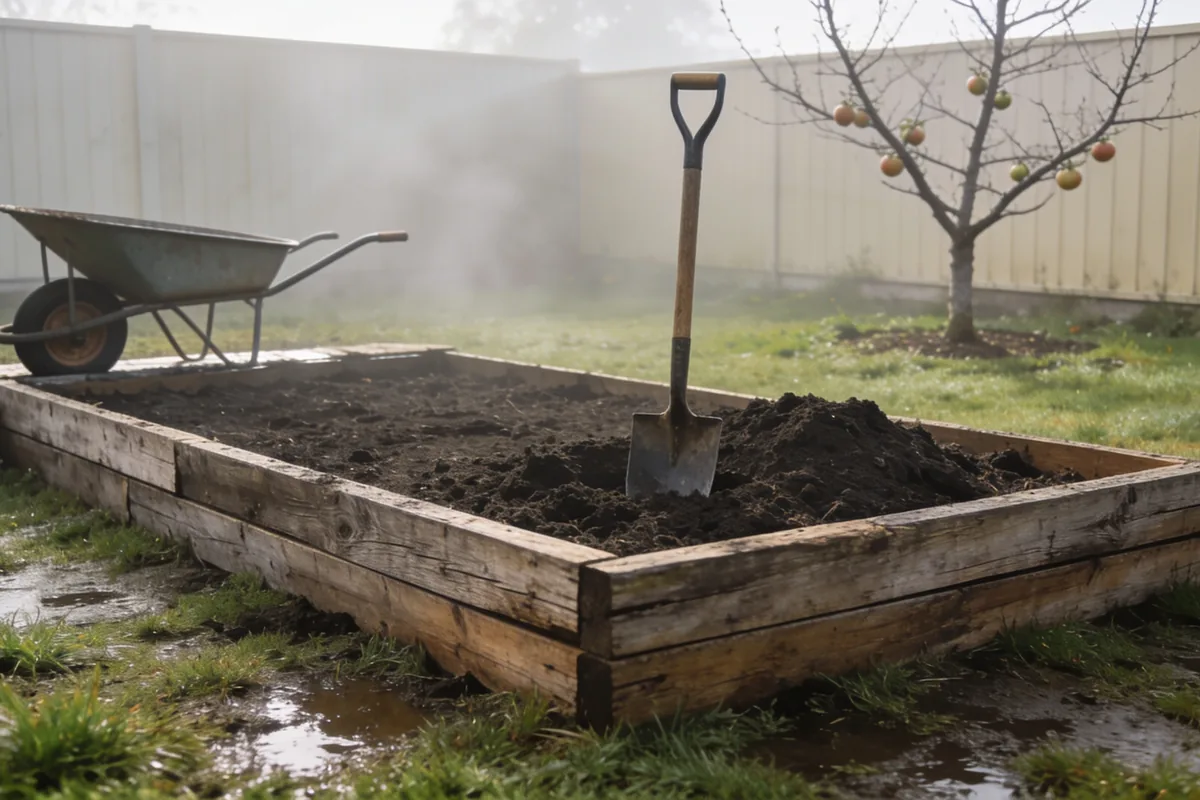
The frame has been sitting on the wet lawn since Saturday, four sleepers screwed into a rectangle, and beside it is a stack of soil bags still wrapped in plastic. The bed was supposed to be full by now. The bags look like plenty, and they are not, because a raised bed holds more than a rectangle suggests and the rectangle holds more than the bags do. That gap is where the money goes, and it opens before the first seedling goes in. The two decisions that matter are what the frame is made from and how much fill it takes, and they are best made in that order.
The frame itself is fine. It is straight, it is level, and the corners are square, which is more than most first attempts manage. What is missing is the part nobody puts on the plan. The material is a decision with a decade in it, and the fill is a decision measured in litres, and both are made before a single plant goes in.
Get them wrong and the bed gets rebuilt or topped up twice, which is the expensive version of both. Get them right and the build is one weekend, and the rest is planting.
What the frame is made from
Five materials do most of the work in Australian backyards, and each one is a trade between cost and how long it lasts. The trade-offs below are the ones Gardening Australia sets out, in its own terms.
| Material | What it suits | What to watch |
|---|---|---|
| Hardwood sleepers | A first bed; moderate cost, easy to use, and they can be raised up for extra height | Try to source sustainable timber, and always avoid treated hardwood railway sleepers, because the coating is often toxic |
| Treated pine | Mobile beds on raised legs and wheels; it is a light softwood, so it moves | Not as durable as the harder options, and always ensure the product has not been treated with arsenic |
| Steel sheeting | Hip-height sleepers; premade panels are an easy option for a raised bed | Cover the sharp edges, and accept that steel will eventually corrode |
| Masonry, double thickness brick | The top end of cost and the top end of durability | Keep mortar away from the soil, because it is highly alkaline and can be toxic to plants |
| Gabion walls | A solid bed with low environmental impact | The walls need filling, and building rubble is what the source suggests for the job |
Read the table as a set of questions rather than a ranking. The material decides the cost now and the cost later, and the later cost is the one that surprises people who chose on price alone. What a material suits answers the easy half of the question; what to watch is the half that costs money in year three. A bed is a purchase that then stands in the weather for a decade, and the weather does not care what it cost.
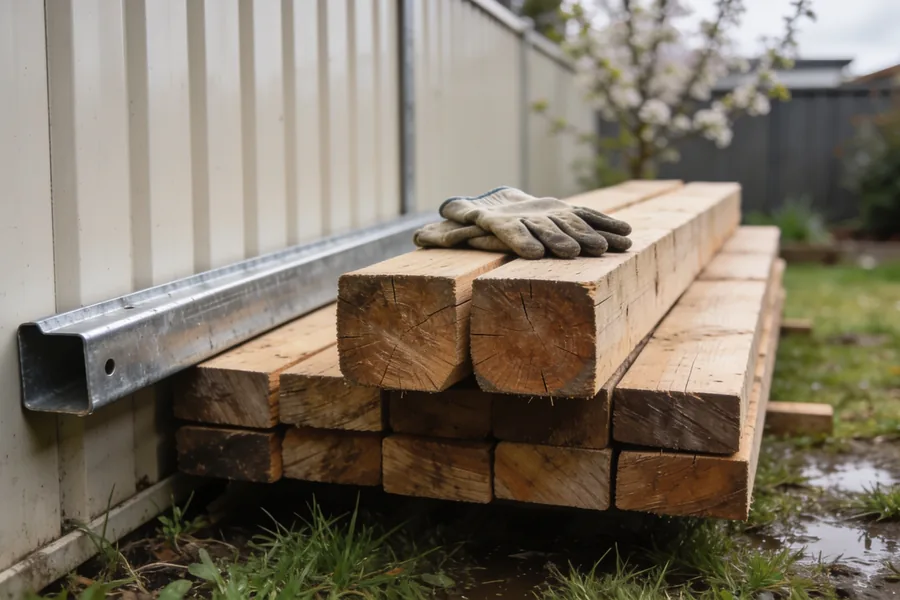
Two of the cautions deserve repeating in plain words, because they are the ones that end up in the soil. Treated hardwood railway sleepers should be avoided, on the source’s own reasoning that the coating is often toxic. Any treated pine should be confirmed as not treated with arsenic before it becomes a bed. Neither point is a reason to avoid timber. Both are reasons to ask before buying it.
What the source does not say matters as much as what it does. It does not rank the materials, it does not quote a price, and it does not declare any of them unsafe as a category. The two warnings are specific, and everything else is a trade.
The sleepers’ own virtue is that they can be raised. A bed on two courses sits higher than one on a single course, and the extra height is the difference between gardening standing up and gardening kneeling, which is a real part of the access question the source leads with.
The summary of the table is a line rather than a verdict. Durability and cost move together, so the material question is really a question about how long the reader intends to stay. And the safety question is answered at the yard, not online: it depends on how the timber in front of you was treated, which is a label to read or a person to ask before the sleepers go in the boot.
The choice is also reversible in one direction only. A sleeper bed can be taken apart and moved. A masonry bed cannot, and a steel bed will not want to be.
How much fill it takes
This is the arithmetic that surprises people, and it is best done on paper before any bags are ordered. Volume is length times width times depth, in metres, and one cubic metre is 1,000 litres.
A bed 2.4 metres long and 1.2 metres wide, filled to 30 centimetres, comes to 0.864 cubic metres, which is about 860 litres before the soil settles. That is the figure before settling, and the figure has one more turn in it: beds are rarely filled to the brim, so the real number is the depth used rather than the height of the timber.
It also helps to decide the depth before the timber is cut. Thirty centimetres is a common working depth and the figure used above, but the bed is a box, and the box takes whatever depth is built into it. The volume follows that decision, not the other way around.
The same arithmetic works for a smaller bed. A bed 1.2 metres by 0.9 metres at the same 30 centimetres comes to 0.324 cubic metres, about 320 litres. That is the number to take to the supplier, whether the fill arrives in bags or by the trailer load.
Bag maths is the other place the arithmetic helps. A bed of about 860 litres is a great many bags, and the settling is the word that catches people out. The frame is usually the cheaper half of the project, which is the fact to know before the shopping list is written.
Two consequences follow. First, order the volume rather than the bag count, because bags are sold by volume and the count is a conversion waiting to go wrong. Second, expect to top the bed up in the first season, because fresh fill settles and the level drops. The frame sets the volume, so the frame comes first, and the volume decides what the project costs after that. Doing them in that order removes the guesswork from the shopping list, and it is the number that keeps the second trip to the supplier to one.
And the depth is a choice rather than a fixed value. A bed filled to 20 centimetres takes two thirds of what the same bed takes at 30, which is the lever to pull when the budget is tight and the crop is shallow-rooted. The fill can be topped up later; the frame cannot be easily changed for less money.
Where to put it
The source leads with access, and the advice is meant literally: raised beds give the gardener room to work around the plants, and that matters most for anyone with limited mobility, so the bed should sit where it can be reached from every side. A bed against a fence is a bed with one working side.
That single sentence should move the bed before anything else does. A position that allows work from all sides matters more than a position that is two metres sunnier, because the bed is worked every week and admired less often than it is weeded. It is also a design constraint: a bed that can be reached from all sides can afford to be wider than one that cannot, which is why the position and the frame size are decided together rather than one after the other.
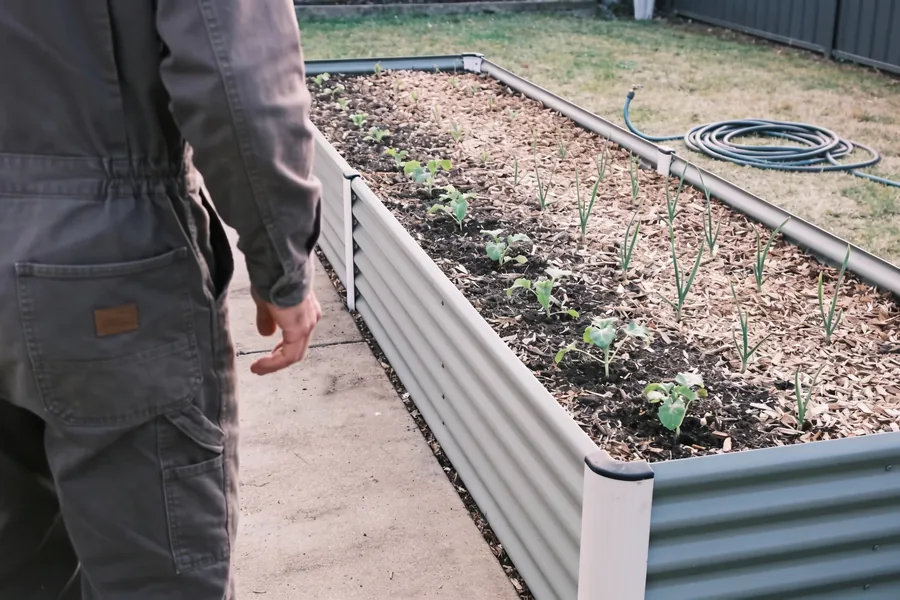
After access comes light, then water. A bed needs the sunniest position the yard can offer, and a tap or a hose reach within carrying distance. Water access deserves the last word of this section, because a bed that is far from a tap gets watered by hand, and the hose that will not reach is a problem that shows up in the first hot week.
The surface it stands on is the third consideration, and it is where renters and paved yards get good news. No-dig beds can be built on top of an existing bed, a lawn area or even a hard surface, which means a concrete courtyard is not a disqualification. If the bed is going on a hard surface, the volume calculation above still stands, and drainage becomes a question to settle before the fill goes in.
There is a fourth consideration the source is quiet about and every gardener learns: what is already growing there. A bed placed in the best light in the yard is still a bed placed on top of something, and the no-dig option is the one that turns that fact into an advantage rather than a problem.
What lasts
Matching the material to the person is the part that saves money. The sleeper bed suits a first garden, where the commitment is real but the plans are still forming. Treated pine suits a bed that moves, whether that is a rental or a deck that gets rearranged. Steel and masonry suit permanence, and they ask for the biggest spend up front to get it.
Steel is the material that surprises people in both directions. It is the easiest to assemble and the fastest to look established, and it is also the one with a clock on it, because the source is clear that it will eventually corrode.
The gabion option is the one most people have never considered, and the source is spare about it: a solid bed with low environmental impact, filled with building rubble. For a reader with a pile of broken concrete and an eye for texture, it is the material that turns a waste problem into a wall.
That is the same logic the site applies to metal roofing: choose a material once, and check what it will cost you later before the purchase rather than after. A garden bed and a roof are both decisions with a long tail.
There is no verdict beyond the trade-offs. The most durable bed is not the right bed for a renter, and the cheapest bed is not the right bed for someone planting a fruit tree in it. Ask which material lasts as long as the plan does, and nothing more. The materials are the easy part of the decision; the plan is the part the table keeps pointing at.
Wicking beds and no-dig beds
Wicking beds are the first variant, and the source names them without further detail: a raised bed built to hold water in a reservoir below the soil, for anyone who wants to water less often. They suit a hot, dry position where the water budget matters, and they are a build rather than a purchase.
No-dig beds are the second, and they are the practical answer for a reader who cannot or does not want to dig. Built on top of what is already there, they turn a lawn or a paved corner into a growing space without a mattock.
Neither variant changes the first two decisions. A wicking bed still needs a frame and a volume of fill, and a no-dig bed still needs to know how much there is to fill. The variants change how the water behaves and how the ground is prepared; they do not change the box. The wicking bed asks for a water reservoir below the soil, which is a build with a little engineering in it; the no-dig bed asks for almost none. Both sit inside the same frame and the same fill, and neither changes the volume calculation above. The wicking bed is also the variant with the most design in it, and the source names it without further detail, which is a fair signal to research it properly before building rather than improvising.
Where the money goes
A raised bed is not a one-off purchase. It asks for something every year, and knowing the list in advance is what keeps the annual cost small.
Topping up as the soil settles, at least once in the first season and a little each spring after it. Mulch, to hold the moisture the bed loses faster than ground soil does, because it is exposed on four sides and from above. And the frame itself, weathering at its own pace, which is the long-term bill that the material choice was really about.
The annual list is short, and each item buys the bed another season. The first spring is the one to watch: a bed that has settled into itself, with the level topped up and the mulch down, asks for almost nothing after that, which is what the whole exercise was for.
The things to skip are the ones that front-load the money. Pre-sealed kits bought before the fill is calculated, because the kit solves the frame and leaves the expensive half unsolved. And treated hardwood railway sleepers, on the source’s own warning about the coating, whatever the price looks like at the yard. Everything else on the list can be decided at the yard, with the volume written down and a label to read.
Sources: Gardening Australia – Starting a Vegie Garden




 Healthcare1 year ago
Supported Independent Living Explained: What SIL Covers and Who It Suits
- Food1 year ago
Balance Your Plate, Boost Your Mood: Beginner’s Guide to Eating Well
- Healthcare1 year ago
Oral Health at Every Age: What Changes and What to Watch For
- Healthcare1 year ago
The Allergy You Can’t See: How to Detect and Manage Silent Food Reactions
- Healthcare1 year ago
Occupational Therapy for Children: The Signs It Could Help, and How to Start
- Business1 year ago
Connections That Count: Why Networking Is Still Crucial for Business Success
- Healthcare1 year ago
Home and Living Support Under the NDIS: What It Funds and How It Fits a Plan
- Healthcare1 year ago
Tired of Plantar Fasciitis Pain? Shockwave Therapy Could Help You Get Back on Your Feet