Science & Nature
Eastern Brown Snakes in Spring: Keep Still, Call 000, Bandage Firmly

If a brown snake might have bitten someone, treat it as a bite. Call 000.
Do not wait for pain, swelling or two neat puncture marks. The Australian Museum says the initial bite of an eastern brown snake is generally painless and often difficult to detect, and its fangs are only about 3 mm long. A bite in long grass can go unnoticed. Waiting for proof only burns time.
Picture the usual case. Someone is pulling weeds along the fence or reaching into a woodpile. There is a brush against the ankle, or a glimpse of a snake sliding away. Nothing hurts. The temptation is to shrug and get on with the job. That is the wrong call. A possible bite gets the full response until a hospital says otherwise.
Spring is when this stops being theory. The snakes are out, people are out in the yard, and the two meet. What follows covers why spring matters, where brown snakes turn up, how dangerous they are, and pressure immobilisation first aid in the exact order the authorities give it.
Why spring
The eastern brown is a warm-weather snake, and spring is its season. In a survey across central southern New South Wales, the Australian Museum reports, eastern browns were encountered at the highest rate in spring.
Several things line up at once. Males become active earlier in the season, which is why most of the brown snakes found dead on roads in spring are males. Breeding runs from mid to late spring, so males are on the move. And the species will bask at air temperatures as low as 14°C, which means a mild, sunny morning is enough to bring one into the open.
Since the shortest day of the year, the days have been stretching out and the ground has been warming. By October the snakes have answered. A cool morning with sun on it is no guarantee of anything.
People come back outside at the same time. Weekend clean-ups, the first mow of the year, kids in the garden after school, sheds opened up for the first time since autumn. The overlap is the risk.
None of this is a reason to stay indoors. It is a reason to change habits through spring: look where you step, look before you lift, and treat every snake in the yard as one to walk away from.
Expect them. Plan for them.
Where they turn up
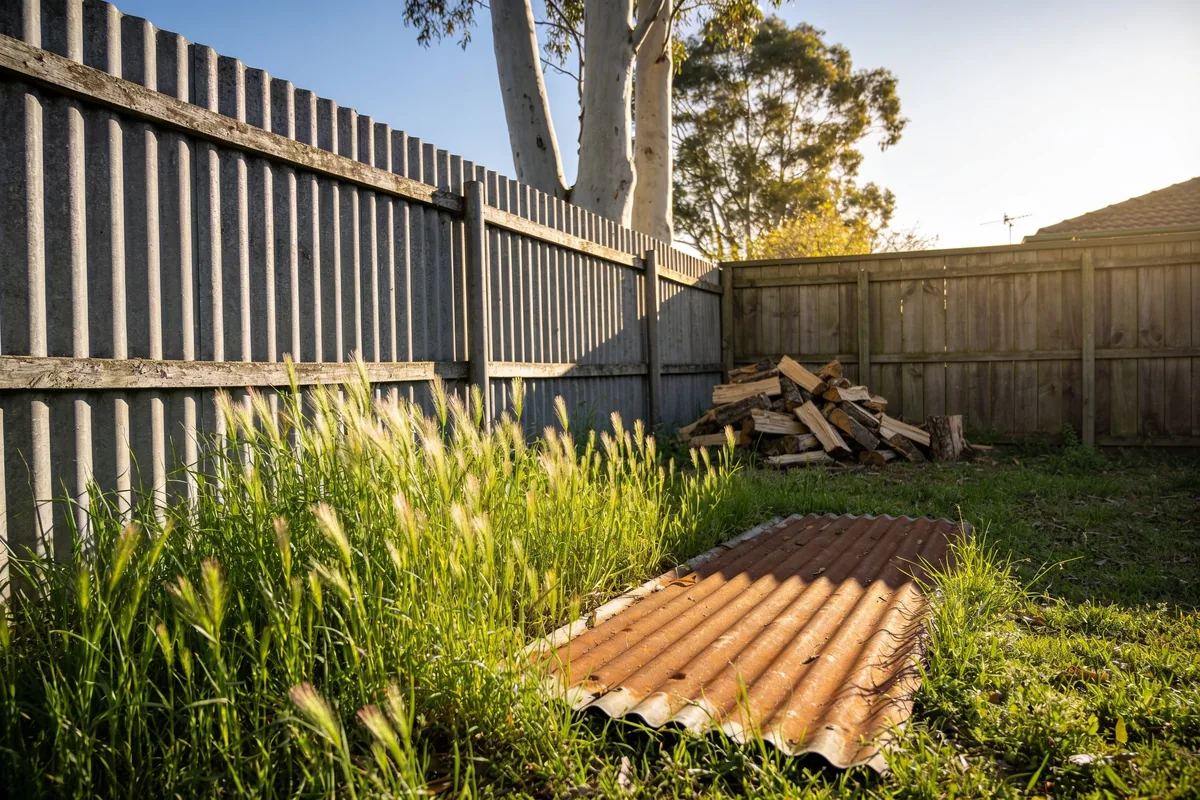
Eastern browns are not confined to the bush. The Australian Museum describes them in open country, farmland and the suburban fringe, sheltering under logs, rocks, sheets of iron and building material. Every item on that list can be found in an ordinary backyard.
healthdirect’s list of where snakes are likely to be is just as domestic: long grass, leaf litter, backyards, sheds, near water, and near mice and rats. A shed with a rodent problem is a shed worth checking. So is the stack of offcuts that has sat behind the garage since the last renovation.
The fatal cases bear this out. A University of Melbourne summary of a review of National Coronial Information System records by Welton and colleagues, published in Toxicon, found that more than half of the fatal bites happened in or near the home. Nearly half happened in urban areas.
Spring is also when the yard gets its first serious attention of the year. Mowing long grass, lifting old sheets of iron, clearing the woodpile and getting to work on a winter-battered lawn all put hands and ankles exactly where a brown snake shelters. Look before lifting anything that has been lying on the ground. Wear boots, not thongs.
Around the house, the practical checks are simple. Keep grass short along paths and play areas. Store iron, timber and building material off the ground or off the property. Deal with mice and rats. Every one of those steps takes something off the Australian Museum’s or healthdirect’s list.
The backyard is snake country.
How dangerous, in numbers
The coronial review covered 2000 to 2016 and found 35 snakebite deaths in Australia. Brown snakes caused 23 of them. healthdirect reports that about 1 in 3 hospital visits for snakebite are for brown snake bites, puts deaths at 1 to 4 a year nationally, and says about 5 in every 100 people bitten are given antivenom.
That last figure needs careful reading. It is no reason to wait and see. The first aid is the same for every suspected bite, and it starts before anyone knows how serious this one is.
The species makes no difference to that first aid either. ANZCOR recommends pressure immobilisation for bites from all Australian venomous snakes. Identifying the snake is a job for the hospital. The person on the ground has one job: get the response right.
One detail from the coronial review stands out. Up to seven of the people who died were bitten while trying to pick a snake up. Those bites did not have to happen.
Leave it alone.
If you see one
Back away to a safe distance and let it go. healthdirect is plain on this: do not try to catch it or kill it, and many snakes are protected anyway. Get everyone else well back too.
Watch the posture. The Australian Museum describes the eastern brown’s threat display, with the neck spread and the head raised, and that display comes before most bites. A snake holding that pose is warning. The warning is the cue to leave.
Do not rely on colour to decide what it is. Eastern browns vary widely in colour, and a wrong identification is a real risk. Any snake that might be a brown gets treated as one.
Children need the rule in plain words: stop, back away, tell an adult. They also need to know that a bite might not hurt, so “something touched my leg” near long grass is worth saying out loud. An adult who hears that treats it as a possible bite.
Distance is the whole plan.
First aid, in order
This is the section to read twice. The order comes from the NSW Poisons Information Centre and healthdirect, and the bandaging follows ANZCOR Guideline 9.4.8, the Australian and New Zealand first aid guideline on pressure immobilisation.
- Call 000. If 000 does not connect on a mobile, call 112.
- Get the person away from the snake.
- Keep them still and calm. ANZCOR’s wording is to keep the victim and the limb completely at rest. No walking, no running, no getting up to fetch things.
- Bandage. Use a broad elasticised bandage, 10 to 15 cm wide. Apply it firmly over the bite site. Then apply a second bandage, starting at the fingers or toes and working up to cover the whole limb. Bandage over clothing if possible. It should be tight enough that a finger will not slide under it easily.
- Splint the limb. Keep it from moving. For a bite on the arm, add a sling.
- Note the time and mark the site. Write down when the bite happened, and mark the bite site on the bandage.
- Start CPR if they stop breathing normally.
The order is deliberate. The call goes first because an ambulance takes time to arrive, and everything else on the list can be done while it is on its way. Getting the person away from the snake comes second. Stillness comes before the bandage, because a person walking about while someone hunts for a bandage has already broken step three.
The bandage comes down to three checks. Is it broad and elasticised, 10 to 15 cm wide? Is there one firm over the bite, and a second running from the fingers or toes up the whole limb? Is it firm enough that a finger will not slide under easily? Three yeses, then the splint.
While waiting, keep them lying still, keep them calm and keep watching their breathing. If it stops being normal, CPR starts. Send someone else out to the street or the gate to wave the ambulance in.
Bring the ambulance to the person. The person does not go to the ambulance, does not walk to the car and does not get up to meet anyone at the gate.
A word on the bandage itself. ANZCOR recommends pressure immobilisation for bites from all Australian venomous snakes, and it is the standard. ANZCOR also notes that field studies have not shown a clear benefit, and that poor application is common. Read those two lines together. The bandage is the recommended standard, and it only counts if it is applied properly: broad, firm, the whole limb, then splinted. A loose wrap around the ankle is not the technique.
Practise it once on a healthy leg before it is ever needed. A bandage in a drawer is little use if nobody in the house has ever wrapped one. One short session on a willing leg, toes to hip, then a broom handle as the splint, and the order sticks.
What not to do
ANZCOR, healthdirect and the NSW Poisons Information Centre rule all of these out.
- Do not wash the bite. Venom left on the skin can help identify the snake.
- Do not cut the bite.
- Do not suck the bite.
- Do not use a tourniquet.
- Do not let the person run. Stillness is the instruction.
- Do not remove the bandage before hospital. Once it is on, it stays on.
- Do not try to catch or kill the snake. The venom on the skin does the identifying.
Cutting and sucking belong to old films and older advice. A tourniquet is out, full stop, and it is no substitute for the bandage. Washing feels like the responsible thing to do, but it removes the venom that can identify the snake. Running, even a short way to get help, breaks the stillness the whole method depends on.
None of these is negotiable.
Not every bite lands on an arm or a leg. For a bite on the body or the head, ANZCOR says to apply firm pressure over the bite site only. Never restrict breathing, and never press on the neck.
Pressure, stillness, then wait for help.
Alone, or far from help
The principle holds on a solo walk, on a farm or at the far end of a long driveway with nobody home. Call 000 first, as always.
ANZCOR’s guidance for someone on their own is direct. Bandage as completely as you can, then stay still until help arrives. If no help can reach you, apply local pressure over the bite and move yourself to get help.
Moving is the last resort, kept for the case where help cannot come. Where help can come, stay put and let it.
Plan for this before spring gets going. Before working alone somewhere remote, tell someone where you will be and when you expect to finish. Carry the phone on you, not in the ute. Keep the bandages within reach, not back at the house.
Stillness first, if at all possible.
Three things to have ready before summer
Two broad elastic bandages in the car, and two in the house. The technique uses one firmly over the bite and a second up the whole limb, so one bandage is not enough. Check they are the broad elasticised kind, 10 to 15 cm wide. A thin roll left over from a sprained wrist will not do the job. Keep them where they can be reached in seconds: the glovebox, the laundry, the hook by the back door.
The numbers, known. 000 for the emergency, 112 as the mobile fallback, and the Poisons Information Centre on 13 11 26. Save that last one in the phone today, while nothing is happening.
Long trousers and boots for yard work. The Australian Museum’s advice is simple clothing sense. Whether the job is building raised garden beds, weeding the back fence line or clearing out the shed, wear long trousers, boots and gloves. Bare ankles in long grass in October are an invitation.
One habit goes with all three. If anyone working outside says something brushed or pricked their leg, stop the job and take it seriously. That is how the painless bite gets caught.
The bite may never be felt. Assume it. Call 000, keep still, bandage firmly.
Sources: ANZCOR Guideline 9.4.8, Envenomation: Pressure Immobilisation Technique, Australian Resuscitation Council (https://www.anzcor.org/home/first-aid/guideline-9-4-8-envenomation-pressure-immobilisation-technique); Snake bites, healthdirect (https://www.healthdirect.gov.au/snake-bites); Eastern Brown Snake, Australian Museum (https://australian.museum/learn/animals/reptiles/eastern-brown-snake/)


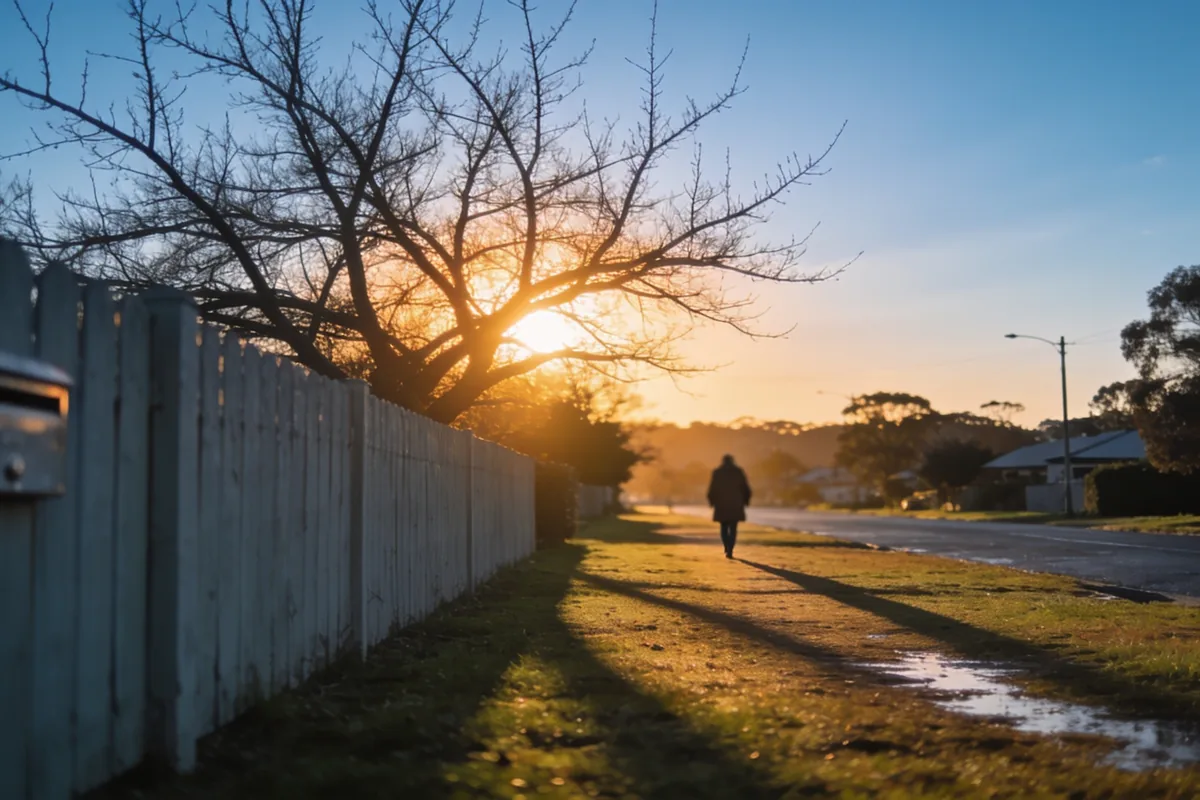
At 4.53 on a Sunday afternoon in June, the light in Sydney gives up. The sun has been sliding down behind the rooflines for an hour, the light has that thin, sideways quality it only has in June, and the clouds over the railway line have gone the colour of a cold peach. The streetlights are on while people are still walking home from the shops. A woman in a puffer jacket crosses at the lights with a bag of groceries and the afternoon closes behind her. Two kids in school jumpers are still kicking a ball on the corner, chasing the last of the light the way you do in June, and by five past five the street is dark enough that the ball is hard to see. It is the middle of the afternoon and the day is already over. This is the year’s shortest day, and it turns on Sunday 21 June at 6.24pm.
The moment arrives in the dark, which is the first strange thing about it. By the time the solstice lands, the sun has been down for an hour and a half. The turning point of the daylight year comes and goes while the kettle boils.
Inside the houses along the street, the day has its own shape. The kitchen light goes on at five, the hallway is dark by half past, and the dog gets its walk under the streetlight whether anyone likes it or not. Winter afternoons are small indoors, and the year’s shortest one is the smallest of them.
The moment itself
The June solstice is the instant the sun sits at its lowest point in the southern sky, which is a formal way of saying the day the southern hemisphere leans furthest away from it. It is the far end of the year’s light, and 2026 puts it at 6.24pm on Sunday 21 June, eastern Australian time.
The tilt is the whole of it. The southern hemisphere leaning furthest from the sun is the reason the day is short, and the same tilt is the reason the northern hemisphere marks its longest day of the year at the same moment. The solstice is a moment rather than a stretch of time. The day around it is what you live in: nine hours and fifty-three minutes of light in Sydney, gathered into the middle of the day.
What the instant does to the day is easier to feel than to explain. In Sydney the sun comes up at 6.59am and sets at 4.53pm, which is 9 hours 53 minutes and 49 seconds of daylight. The light starts late and finishes early, and the middle of the day holds most of what there is. The evening arrives in the middle of the afternoon, and the sunglasses stay in the drawer.
It helps to know what the short day is measured against. The same tables measure the June day at 4 hours and 31 minutes shorter than the December solstice, which is the size of the difference a Sydney year runs through. That is the swing the city lives inside: half a working day of daylight, lost and found again, every twelve months. The light does not vanish in June. It narrows, and it gathers itself into the middle of the day.
The week around the date sits on a plateau. The shortest day is barely longer than the one before it, and the day after is longer by less than a second, which makes the solstice less a turning point and more the flat bottom of a curve.
For the hemisphere, the timing is not a coincidence: in locations south of the equator, the shortest day of the year falls around this date, so the same Sunday is shared from Sydney to Hobart and beyond.
Two cities, two shortest days
On the same Sunday, Hobart gets a shorter day than Sydney. The sun rises in Hobart at 7.41am and sets at 4.42pm, which is 9 hours and 50 seconds of daylight against Sydney’s 9 hours 53 minutes 49 seconds.
The gap is not about who is further east. Latitude decides the length of the shortest day, and the further south a city sits, the more of its light it pays for in winter. Hobart gives up almost 53 minutes of daylight to Sydney on the same Sunday, which is the difference between an evening that ends while it still feels like afternoon and an evening that ends while you are still working. It is the southern cities that pay most for the shortest day, which is the trade latitude sets.
In Hobart the sun is gone by 4.42pm, which is the other half of the same picture: the daylight total is nine hours and fifty seconds, and the last of it leaves early in the afternoon.
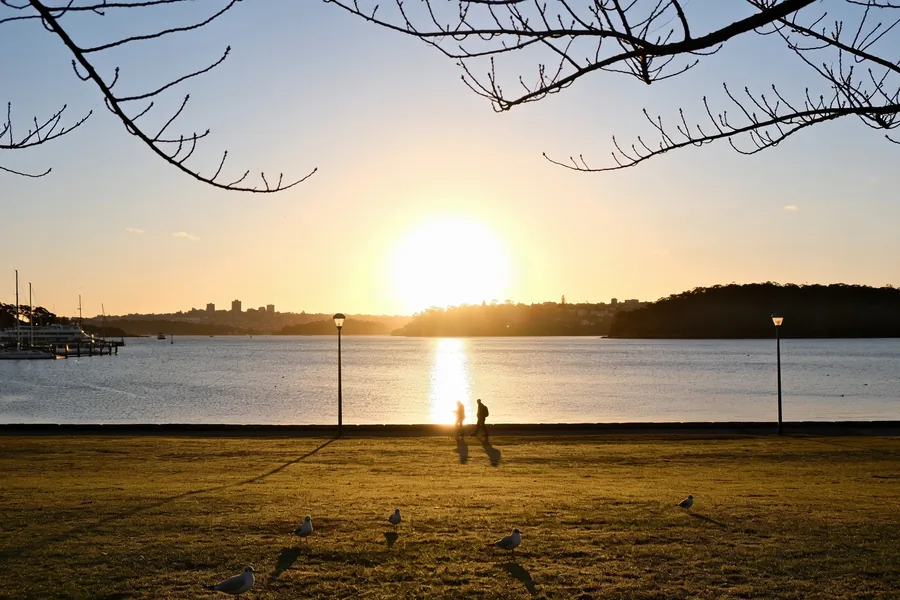
For a reader in either city, the number has a use beyond trivia. It is the floor the year stands on, and everything after it is an improvement, measured in seconds. The same floor applies to a garden, a balcony or a lunch break: whatever the light has been doing, it has finished getting worse.
If the sky and the coast are the part that holds your attention, the site’s long view of what changes on the Australian coast by 2050 works in the same spirit as this day does: slowly, on a schedule nothing can hurry. This piece moves in seconds. That one moves in decades.
Tomorrow is longer, barely
Here is the part nobody tells you, and it is the reason this day carries a whole article rather than a line in a calendar. The shortest day ends, the year tips, and the next day is longer by less than a second.
The tables put 21 June’s daylight at 9 hours 53 minutes 49 seconds and 22 June’s at 9 hours 53 minutes 50 seconds, a gain measured in a single heartbeat of extra light. The year’s turning point arrives and nothing changes yet. There is no moment on the Monday when you notice, no shift in the afternoon, no switch thrown at 6.24pm on the Sunday while you are inside with the heater on.
The change is real, it is relentless, and it is also the least dramatic event of the calendar year, which is exactly why it goes unremarked. Two days later, the difference is still too small to perceive. That is the scale of the turning point, in practice.
What you have instead is a direction. From here the days lengthen, slowly at first and in amounts too small to feel, and it is the direction the date gives you, more than any measurable gain.
And the direction is the part that lasts. The arithmetic keeps running after the solstice has been forgotten, and the day keeps lengthening while nobody is watching.
Why the number is worth knowing
The solstice is the one day of the year that people stand outside for, even though nothing happens that you can see. They stand there because it is the turn, and because a number makes the turn real. The mark of the day is not an event; it is a direction with a date attached, and the date is the part you can write down.
Take a photo from the same spot in the garden, or the same corner of the park, at the same time each evening this week, and you have a record of the year’s flat bottom. Keep the habit and you have a record of the turn.
The habit has a long half-life. A photo taken from the same spot at the same time each week through winter turns into a record of the season’s turn, and the flat week in the middle of it is the frame that makes the rest legible. The photo does not need to be good. It needs to be from the same spot, at the same time, which is the only discipline the record requires. There is something quietly satisfying about holding the two side by side, with a second of extra light between them.
There is a smaller pleasure in it too. Once you know the shortest day is 9 hours 53 minutes in Sydney and 9 hours in Hobart, the winter stops being a vague grey sentence and becomes a quantity. It has a bottom, and you have just seen it. The season ahead can be measured, and the part that has already happened has a number attached to it.
What to do with the week
The practical version of a solstice is simple: the daylight that is left sits in the middle of the day, so put the things that need light there. The lunchtime walk is the walk that still happens in sun. Outdoor jobs get done in the middle of the day, not on the way home, because the way home is dark now.
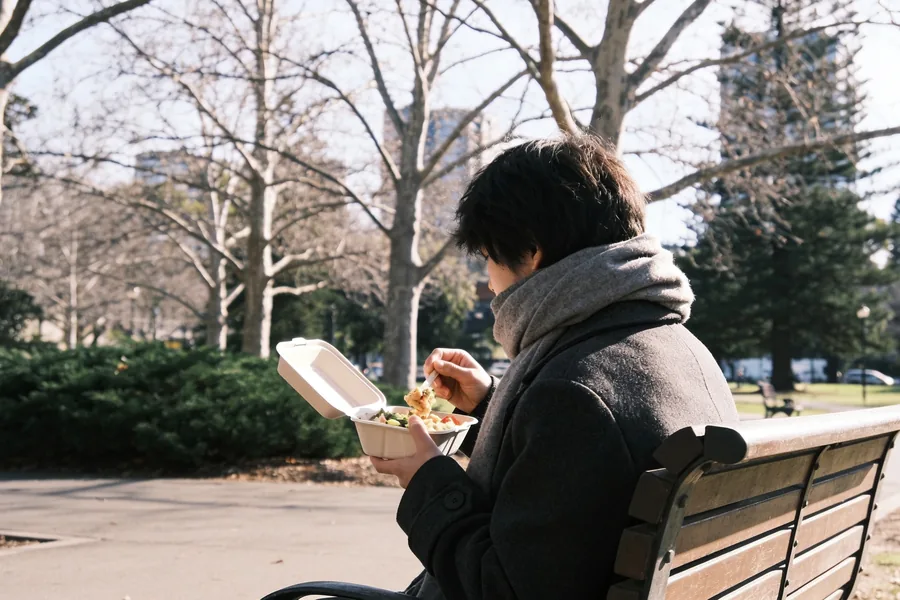
There is a version of the week that works with the light rather than against it. Move the afternoon run to lunchtime, take the meeting outside if the day allows, and save the jobs that need seeing for the middle of the day. The dark end of the afternoon suits the things that never needed daylight anyway. In June, the hours that still have light in them are the hours to plan around.
That last part needs saying without drama. The evening commute being in the dark is a fact of the calendar in late June, not a warning, and it looks after itself as the year turns. If the darkness is the part that bothers you most, the site’s short break in Brisbane is the winter-north option for a reader whose complaint this month is the light.
When the light starts coming back
Skip the solstice apps and the sunset countdowns. The time of the sunset in Sydney will not tell you anything the date has not already told you, and the countdowns measure a change of a second or two a day, which is not a change you can feel. Skip the argument about whether winter started on 1 June or on the solstice; both are conventions, and neither changes what your garden does next month.
And skip the idea that anything happens at 6.24pm. The solstice is a line in a table, drawn at a moment you will not be standing outside for, in the dark, with the heater on. There is no ceremony the sky performs, and nothing to see, which is why people photograph it instead: a photo is something to hold on to when nothing else happens.
The date also answers the question people ask in July, which is why the evenings are still dark. They are dark because the year is only a few weeks past its floor, because the light is still small, and because the arithmetic of the next month is already running. Knowing where the bottom is also makes the grey weeks afterwards easier to measure.
The two useful facts are the ones you can carry into the rest of the month: 21 June is the bottom, and from 22 June the days get longer. The turn is small and it is real, and it arrives on the Sunday evening while the kettle boils. The light starts coming back the day after the shortest day, and it starts quietly.
Sources: timeanddate.com – Sunrise and sunset times, Sydney, June 2026 · timeanddate.com – Sunrise and sunset times, Hobart, June 2026


 Healthcare1 year ago
Supported Independent Living Explained: What SIL Covers and Who It Suits
- Food1 year ago
Balance Your Plate, Boost Your Mood: Beginner’s Guide to Eating Well
- Healthcare1 year ago
Oral Health at Every Age: What Changes and What to Watch For
- Healthcare1 year ago
The Allergy You Can’t See: How to Detect and Manage Silent Food Reactions
- Healthcare1 year ago
Occupational Therapy for Children: The Signs It Could Help, and How to Start
- Business1 year ago
Connections That Count: Why Networking Is Still Crucial for Business Success
- Healthcare1 year ago
Home and Living Support Under the NDIS: What It Funds and How It Fits a Plan
- Healthcare1 year ago
When Everyday Tasks Get Hard: What an Occupational Therapist Can Do