Automotive
How a Bad Thermostat Can Compromise Your Engine’s Efficiency

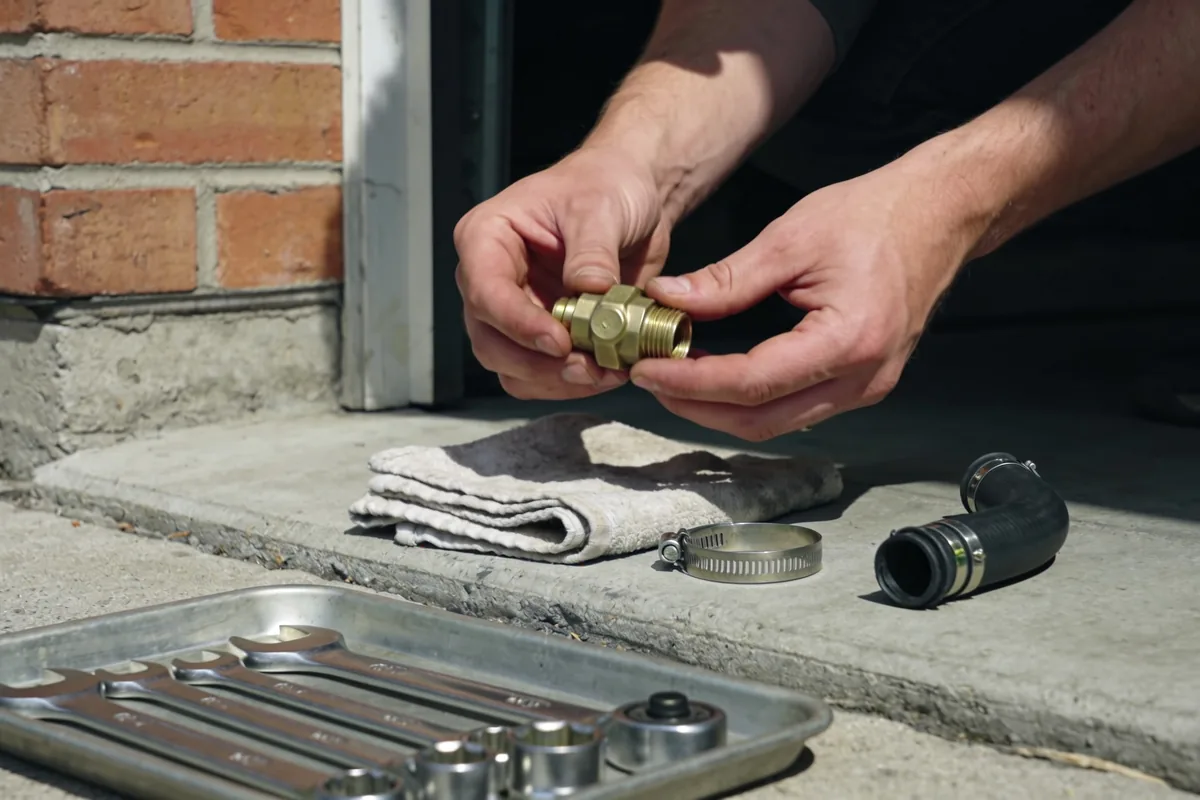
The thermostat is one of the cheapest parts in a car and one of the most consequential when it fails, because the whole cooling system is arranged around it. Its job is to hold the engine in the temperature range where it runs efficiently, and when it stops doing that job, the failure shows up in the fuel bill long before it shows up on a repair invoice. This article covers what the part does, the five signs that it is failing, and what each of the two failure modes does to an engine.
What the thermostat does
The thermostat sits between the engine and the radiator, and it is a valve with a temperature setting rather than a fixed opening. When the engine is cold, it stays closed, which keeps the coolant in the engine and lets it warm up quickly. As the coolant reaches the preset temperature, the thermostat opens and allows coolant to circulate through the radiator, where the airflow carries the heat away. The result is an engine held near its operating temperature rather than one that runs cold all day or climbs towards overheating.
Both extremes cost money. An engine that runs too hot is under stress; an engine that runs too cold burns more fuel and wears differently. The thermostat is what keeps the engine away from both.
Why thermostats fail
The part itself is simple, and its failure modes are ordinary. Age is the first cause: the valve contains a wax or spring element that cycles open and closed for the life of the engine, and after years of cycles it stops moving cleanly or sticks in one position. Coolant condition is the second, because a system left with corroded or contaminated coolant deposits debris that the valve cannot clear, and a thermostat that cannot close properly is as much a problem as one that cannot open. The third is the housing and the surrounding parts: a leak at the housing, a failing temperature sensor or a weak radiator cap all produce the same symptoms and are found in the same diagnosis, which is why a proper check looks at the whole cooling system rather than the valve alone.
The practical consequence is that a thermostat should be inspected rather than replaced on suspicion. A technician with the system pressurised can tell which component is at fault, and the thermostat is replaced as part of a cooling system service, alongside the coolant and any hose or cap that has reached the end of its life. Replacing the valve and leaving the rest is a false economy, because the next weak component fails on the same schedule.
The five signs of a failing thermostat
The symptoms are worth knowing because they appear in a predictable order, and the earlier ones are cheap to act on.
The first is engine overheating, or a temperature gauge that climbs higher than it used to on the same drive. The second is a gauge that fluctuates: up and down within a trip rather than settling at its usual position. The third is poor fuel economy, which is the symptom owners tend to attribute to everything except the cooling system. The fourth is a lack of cabin heating, which usually accompanies a thermostat stuck open, because the heater draws its warmth from the same coolant. The fifth is coolant loss or pressure building up in the system, which can point to the thermostat housing, the hoses or the radiator cap rather than the valve itself.
One pattern covers most of them: a gauge that is consistently too high or unusually low is the thermostat’s signature, and it deserves diagnosis rather than observation.
The two failure modes
Stuck closed: overheating
A thermostat stuck closed keeps the coolant in the engine, and the engine’s temperature climbs with nothing to carry the heat away. Overheating is not a single problem; it is a cascade. A cylinder head can warp under the heat, a radiator can be damaged, a head gasket can fail, and the internal components wear faster every time the engine is run hot. An engine that has overheated once is an engine with a question mark over it.
The practical consequence is that a stuck-closed thermostat is a stop-driving fault rather than a schedule-it-in fault. Continuing to drive with the gauge climbing turns a small part into a large repair, and the repair bill moves from the cooling system to the engine itself.
Stuck open: running cold
A thermostat stuck open lets coolant circulate constantly, and the engine never reaches its proper temperature. The fuel consequence is direct: a cold engine runs on a richer air-fuel mixture, so it burns more fuel than an engine at operating temperature, and the difference is most obvious on long drives where the engine should be running at its most efficient.
The second consequence is lubrication. Engine oil is designed to perform at temperature; when the engine stays cold, the oil stays thicker and circulates less freely, which increases friction and wear inside the engine. Third, the engine’s control unit is constantly adjusting fuel delivery and ignition timing to cope with a temperature that will not settle, which shows up as rougher running and less responsive power. None of it produces a warning light. All of it produces cost.
What a driver can check, and what needs a workshop
Two checks are safely within reach. The first is the coolant level, checked when the engine is cold, against the marks on the reservoir. Never open the radiator cap or the reservoir on a warm engine, because the system is pressurised and the coolant can scald. The second is the gauge’s behaviour over a normal drive: where it sits after ten minutes, whether it moves, and whether the cabin heater responds. A gauge that never reaches its usual position, or one that climbs and falls, is information worth having before the car sees a workshop.
Everything beyond those two checks belongs to a technician with the equipment to pressure-test the system and diagnose the thermostat properly. The check is whether the thermostat is sticking, whether the issue is the housing, the sensor or the coolant itself, and what else has been affected. Because this is where the diagnostic ability matters more than the parts bill, a workshop that services cooling systems is the kind of business to look for: one that pressure-tests the system, checks the hoses and the water pump while the coolant is out, and replaces the thermostat as part of a proper cooling system service rather than as an isolated swap.
When to act
Four triggers say the thermostat should be checked rather than watched. A gauge that behaves erratically over several drives. Overheating that arrives without explanation, particularly in traffic or on a climb. A heater that has stopped producing heat. And slow warm-ups paired with fuel consumption that has crept up for no other reason. Any one of them justifies a diagnosis; the first three justify it before the next long drive.
The cost logic
A thermostat is an inexpensive component, and the service around it is an affordable job. The comparison that should drive the decision is against what overheating costs: the cylinder head, the gasket, the engine, and the days without the car while it is repaired. A cooling system check is the cheapest insurance in the engine bay, and it is the one most often postponed.
The same ownership arithmetic applies to the car as a whole: running costs, repair costs and finance costs sit in the same ledger, and a decision about repairing one car rather than replacing it is a finance decision before it is a mechanical one. The framework for weighing whether refinancing a car loan is worth it covers that side of the equation, and the cooling system, serviced in time, is what keeps the car on the profitable side of it.


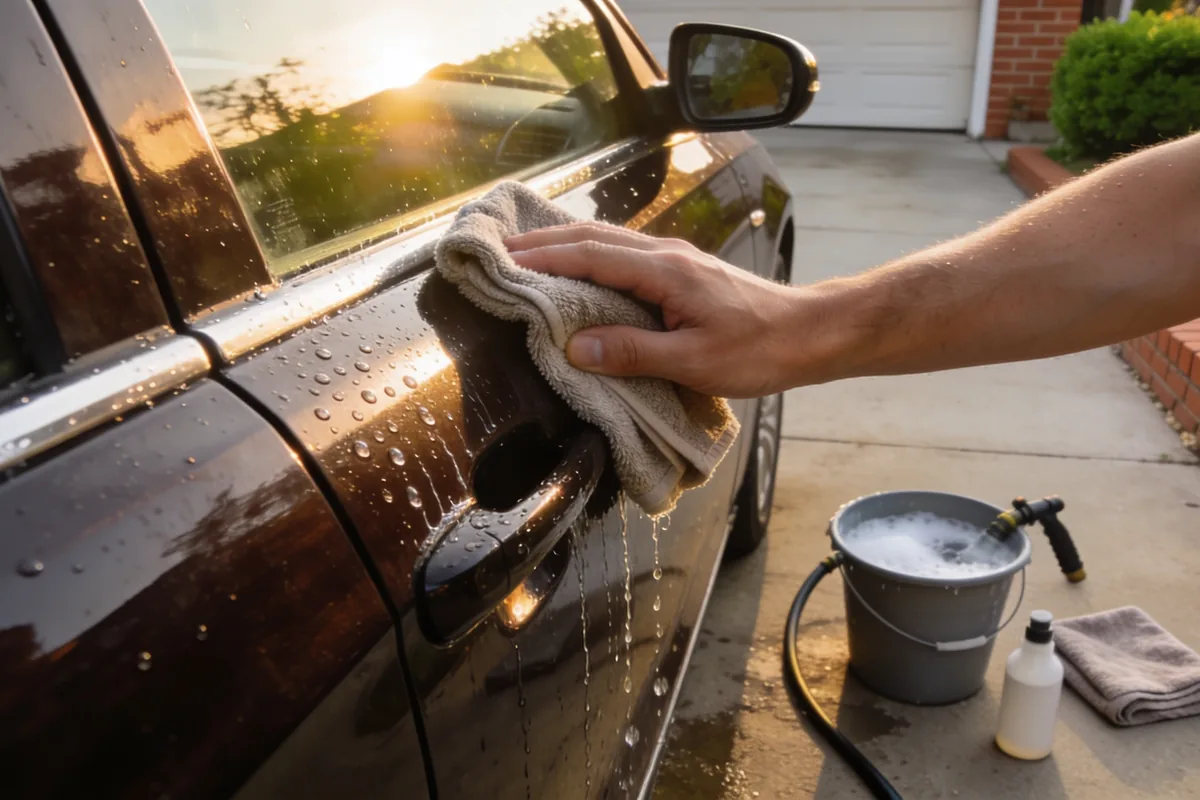
Detailing sits in the same category as servicing rather than in the one the word “clean” implies. A car’s surfaces are materials, and materials age: paint oxidises in the sun, leather dries and cracks, plastics fade, upholstery stains. Detailing slows those processes and, where the damage has begun, corrects some of it. What follows is what the work includes, what a polish actually does to a panel, and the point at which the money is better spent on protection than on appearance.
What detailing includes
The work divides into a handful of processes, each with a different purpose.
Exterior washing and decontamination removes what ordinary washing leaves: bonded traffic film, tar, tree sap and the metallic particles that embed in paint and, left there, feed rust at the edges of the damage. Polishing levels the surface to remove fine scratches and swirl marks. A protective coating, whether a wax or a longer-lived sealant, sits on top and takes the weather in place of the paint. Inside, the work covers carpets and upholstery, the dashboard and trim, leather conditioning where the material calls for it, and the glass inside and out. Wheels and tyres get their own products, because brake dust and rubber are their own chemistry.
The list matters because it separates the processes from their prices. A wash, a decontamination, a machine polish and a coating are four different jobs, and a quote that charges for one while performing another is the most common way detailing money is wasted.
What ages fastest in Australian conditions
The Australian climate is unusually hard on car materials, and it decides which parts of the detailing work pay back.
Paint and clear coat come first. Ultraviolet light breaks down the clear coat that gives paint its gloss and its protection, and the result is a dull, chalky finish that no wash restores. Plastics and trim are second: unpainted exterior plastic fades to grey under the same UV, and interior plastics crack and become brittle. Leather is third, and it fails in a characteristic order, drying out, then cracking at the seams and bolsters, then splitting. Fabric upholstery holds up better but stains permanently once a spill has dried in. The paint, the plastics and the leather are the three surfaces where a periodic protective product and a clean interior genuinely extend the material’s life rather than merely shining it.
What a polish removes, and what a coating protects
The two words are used interchangeably in advertising and mean opposite things.
A polish is abrasive. It works by levelling an extremely thin layer of the clear coat to remove defects that sit within it, such as swirl marks and light scratches. What it cannot do is remove a scratch that has gone through the clear coat, or repair a stone chip, or make faded plastic black again. And because it removes material, it is not a treatment to repeat infinitely: heavy compounding on the same panel over the years thins the clear coat that everything else depends on. A filler or glaze, by contrast, hides defects temporarily by filling them, and the shine it produces washes away within weeks.
A coating or wax is the protective layer, and the choice between the two is a trade rather than a ranking. A wax is inexpensive and simple to apply, and it needs reapplying regularly, which makes it a good fit for a car that gets hand-washed at home. A ceramic or polymer coating costs considerably more to have applied properly and lasts far longer, which makes it a reasonable purchase for a car that lives outdoors, is kept for years, or is expected to hold its appearance for resale. Neither product removes a single defect; they protect the surface that the polish has prepared.
When the machine polisher is worth it
The line between a driveway job and a professional one is mostly about equipment and risk. Washing, decontaminating, waxing, cleaning glass and conditioning an interior can all be done carefully at home. Removing swirl marks and oxidation, by contrast, is machine work: it needs a dual-action polisher, the right pads and compound, and the judgement to know when to stop, because a polisher in the wrong hands burns through the clear coat in the place where it matters most. A reader prepared to buy the equipment and practise on an inconspicuous panel can learn it; a reader who needs a single panel corrected is better served paying for the correction and then maintaining it.
The same logic applies to the interior. A fabric stain that has not dried can be lifted; one that has set, or a leather seat that has cracked, is a restoration question rather than a cleaning one.
Why the work shows at resale
A buyer sees the surfaces first, and surface condition reads as an indicator of how the car was treated overall. That is not irrational on the buyer’s part, because the same owner who lets the paint oxidise has often let other maintenance drift. The resale benefit of detailing is therefore two things at once: a car that presents well in the photographs and the viewing, and evidence of an owner who paid attention. Neither replaces a service history, and the mechanical side has its own early warnings to watch, from the signs of a failing thermostat onwards. The two halves of car care, the mechanical and the material, keep the same company.
The interior, and why it is half the work
The exterior is the visible half, and the interior is the half that decides how the car feels to own. Fabric seats and carpets hold dust, spills and odour, and a stain set for a week needs extraction rather than a wipe. Leather needs the opposite treatment to what most owners give it: cleaned gently and then conditioned, because dry leather cracks first at the seams and bolsters and cannot be repaired once it has. The dashboard and trim fade and become brittle under the same sun that dulls the paint, and a protective product for plastics is a small expense against replacing a cracked panel.
The interior work also has the clearest health argument. Air conditioning recirculates whatever the cabin holds, and a car used by children, pets or a smoker accumulates more of it than the driver realises. A deep clean does not sterilise the car, but it removes the material that odours and allergens live in, and it is the part of detailing a passenger notices first.
What a careful operator will tell you
Detailing has an unregulated edge, and the questions that separate a careful operator from a fast one are all about process. What is the plan for the specific defect, and does it remove the defect or hide it? Will the paint depth be measured before machine polishing, because a car that has been polished before has less clear coat to spend? What is recommended for this car’s use, garaged or outdoors, kept or sold? And what will the operator not do, because a straightforward answer to that last question is the sign of a business that knows where the limits of the work are.
A reader who asks those questions will find that the honest operators give shorter answers than the enthusiastic ones, and that the shorter answers are the ones worth paying for.
A realistic schedule
The defensible version of a detailing habit is modest. A proper wash with a decontamination every few months, a wax or coating renewed on its own schedule, the interior cleaned before stains set rather than after, and a machine polish only when the defects justify one. Under that regime the paint keeps its clear coat, the leather keeps its suppleness and the car keeps its value, which is the entire argument for treating detailing as maintenance rather than as a treat.


 Healthcare1 year ago
Supported Independent Living Explained: What SIL Covers and Who It Suits
- Food1 year ago
Balance Your Plate, Boost Your Mood: Beginner’s Guide to Eating Well
- Healthcare1 year ago
Oral Health at Every Age: What Changes and What to Watch For
- Healthcare1 year ago
The Allergy You Can’t See: How to Detect and Manage Silent Food Reactions
- Healthcare1 year ago
Occupational Therapy for Children: The Signs It Could Help, and How to Start
- Business1 year ago
Connections That Count: Why Networking Is Still Crucial for Business Success
- Healthcare1 year ago
Home and Living Support Under the NDIS: What It Funds and How It Fits a Plan
- Healthcare1 year ago
Tired of Plantar Fasciitis Pain? Shockwave Therapy Could Help You Get Back on Your Feet