Electric Vehicles & Transport
E-Bike Laws in Australia: The Power Limit That Makes It Legal

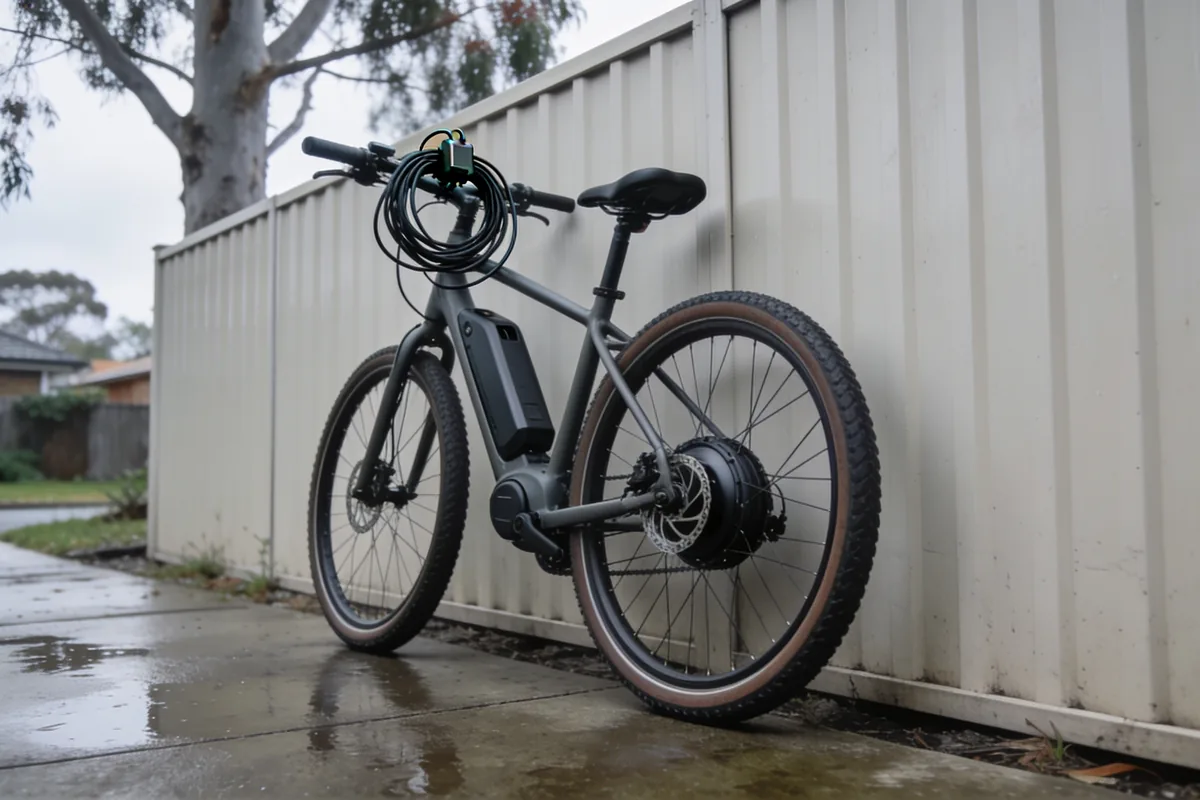
An e-bike is legal or it is not, and the deciding facts are on the label: the motor’s rated power, the speed the motor cuts off at, and the standard the bike was built to. Everything else in the showroom is comfort and price.
This is not a niche problem. The bikes are cheap, the motors are easy to fit, and the sticker is the one part of the transaction nobody checks. The check below takes a few minutes, and it can save an expensive mistake.
The states do not agree on the numbers, which is the part most buyers learn after the money is spent. New South Wales allows 500 watts for now. Queensland allows 250. A bike can be legal in one state and not in the other, and the state you ride in decides which one you are.
That is also the same logic that applies to any costly vehicle decision, whether it is four wheels or two, and the site’s piece on hiring a luxury car on a tight budget is a study in what a buyer gives up when the badge matters more than the specification.
Where the states disagree
Both states publish their rules, and both rules are short. The difference is the number, and the number is the law.
| New South Wales | Queensland | |
|---|---|---|
| Maximum continuous rated power | 500 watts, with a maximum of 250W from 1 March 2029 | 250 watts |
| Motor assistance | Throttle assistance up to 6km/h, or when the rider is pedalling up to 25km/h | Pedal-powered assistance up to 25 km/h |
| Standard | EN 15194 | EN 15194, with a compliance label displayed |
Read the New South Wales row twice, because it contains a deadline. In March 2026 the NSW Government made changes to the definition of a legal e-bike, and the requirements now carry a sunset: 500 watts today, 250 watts from 1 March 2029. A bike bought this year against today’s limit has a date on it. That date belongs alongside the numbers, because a bike bought today is being bought against a rule that is already scheduled to change.
Queensland’s definition starts elsewhere, in what an e-bike is: a bike that has pedals as its primary source of power, with a small electric motor providing assistance. From that definition the requirements follow: 250 watts of maximum continuous rated power, pedal-powered assistance up to 25 kilometres an hour, and compliance with the European standard EN 15194, shown on a label. The Queensland page also names how a compliant bike is recognised on the shop floor, which is the same standard New South Wales names, seen from the other side of the border: most legal e-bikes comply with the EPAC standard, and the compliance sticker is on the bike.
The verdict for the buyer is narrow and unavoidable. Check your state’s number before the price, because the sticker that matters is the one the law reads. The comparison has a practical edge in the used market, too: a 500-watt bike that is legal to ride in New South Wales is not legal in Queensland, so a buyer crossing the border with one has a problem that no receipt fixes. The two lists are also short enough to compare line by line: the same standard, the same cut-off speed, and a power figure that differs by 250 watts.
Software does not save it
This is the sentence that settles most arguments in the shop, and it is the source’s own: e-bikes that exceed the limits are illegal, even if the power or speed is restricted by software, whether that is an app, a switch or code.
An app setting is not a compliance certificate. A bike that can produce more than the limit and has been dialled back is still a bike that exceeds the limit, and the NSW page does not leave room to read it any other way. The same logic rules out the aftermarket throttle kit fitted later, whatever the listing said when it was sold.
The test is the specification, not the settings. If the motor’s rated power is above your state’s number, the answer is no, and no menu screen changes it. Call it what it is: a derestricted bike is a modified vehicle with no registration, no insurance and no legal category, sharing a path with pedestrians. The law’s version is shorter. Exceed the limits and the bike is illegal, whatever the app says.
The software line also answers the most common shop-floor claim, which is that the limit can simply be set back later. A setting that can be changed is not a different motor. The rated power is a fact about the machine rather than about its current configuration, and the page that states it does not offer the rider a way around it. The practical version of the point is a question to ask before the test ride, and it has nothing to do with the app: what is the motor’s continuous rated power, in watts, as built?
The sticker is the proof
Both states point at the same standard, which makes the check simpler than it first looks. European Standard EN 15194 is the specification for electric power assisted bicycles, the EPAC standard, and a bike that complies with it carries a compliance label. The Queensland page’s own instruction is to look out for a compliance sticker on the bike.
On the New South Wales page, the advice is to choose a bike that complies with EN 15194, because it is legal now and in the future. That second clause is the one to hold on to. The 2029 change is coming for the watts, and a bike built to the standard survives it. The standard is not a luxury extra either; it is the thing that makes the bike a bike in the eyes of the rules, and a machine that fails it belongs to a different category of vehicle with different obligations.
If the label is missing, the answer is not “probably fine”. It is that the proof is missing, and the price of finding out later is a bike you cannot legally ride. Ask the seller to show the label, and if the label is somewhere under a battery mount or a coat of gloss, wait while they find it. The check is also the answer to the most common listing problem: bikes sold online often have no documentation at all, and a seller who can photograph the compliance label has answered the question, while a seller who cannot has answered it too.
A label check has a second use as well, and it is the one that saves the most money: it stops the impulse purchase. A bike that fails on the sticker fails in two minutes, in the shop, rather than after the first ride on a shared path. The check costs nothing and it is the only piece of the purchase that cannot be fixed later.
Who can ride
Queensland is the state whose sources cover age and supervision, so that is the only rule stated here. In Queensland, a rider under 16 who cannot yet get a learner licence, or a rider aged 16 or 17 without a licence, may ride an e-bike if supervised by a parent or caregiver. In some low-pedestrian recreational areas, no age or licence requirement applies at all.
That is the whole of the sourced position, and it is stated as the Queensland page states it. Other states and territories set their own rules on both the machine and the rider, and their transport authority is the place to check them. Beyond that, this article stays out of the age question, and for a reason: the states differ most on it, and the reader’s own authority answers it in one page. The supervision rule also carries one implication for a household: the bike’s legality is one question and the rider’s licence status is another, and a legal bike under a rider the state has not cleared is still a question for that state’s rules.
What to check in the shop
Thirty seconds, four items, in this order.
- The label. Find the compliance marking for EN 15194 before you look at the price tag.
- The rated power. It is a specification number, usually on the motor or in the documentation, and it is the number the law reads. Continuous rated power is the figure that matters, not a peak.
- The cut-off. The motor should assist up to 25km/h, with throttle assistance only to 6km/h in New South Wales.
- The state you will ride in. A legal bike in one state is not automatically a legal bike in another, and the answer follows the address.
One line for the seller’s claim: the label beats it. A salesperson can tell you a bike is road legal, and the standard’s sticker is the thing that makes it true. The rated-power item is also the one to photograph: a picture of the label and the specification sheet is the whole evidence file, and it takes a minute at the counter. One more item belongs in the same thirty seconds, and it is not law: the fit. A bike that is the wrong size for the rider is a bike that stays in the shed, and the legal checklist above goes to waste on it.
Short trips are also served by options that need no label at all, and the site’s piece on why local knowledge still counts when you book a taxi is a look at the other way a short journey gets done on a wet morning. The order of this list also matters: the label and the watts come before anything about the ride, because the legal questions cannot be felt from the saddle.
Read the label before the price
The buyer planning to keep a bike for years has one extra thing to know, and it is written on the New South Wales page: the 500-watt allowance falls to 250 watts from 1 March 2029. Buy to the standard and the date is somebody else’s problem. Buy to the current watts alone and it is yours.
Skip the modified and derestricted bikes, whatever the listing promises. Skip the throttle kits sold as road legal, because they are not. Skip any listing that will not show the motor’s rated power, because a seller who cannot state the number is telling you something about the bike.
And read the date on the rules in your own state before you read the price on the bike, because the number that decides whether you can ride it home is already published. The list is short because the rules are short: watts, cut-off, standard, state. Four answers, and the fourth one follows the address.
One limit closes the piece. Nothing here covers fines, penalties or how a crackdown is run, because the sources do not, and guessing about enforcement helps nobody. The rule itself is simple: a labelled, standard-compliant bike under your state’s power limit is a legal bike, and everything else is a conversation with a seller that is better had before the money moves. The date on the New South Wales page is also the buyer’s horizon: a bike bought to the standard is a bike that survives the change, and a bike bought to the current wattage alone has a deadline built into it.
Sources: Transport for NSW – E-bikes · Queensland Government – E-bike rules in Queensland



 Healthcare1 year ago
Supported Independent Living Explained: What SIL Covers and Who It Suits
- Food1 year ago
Balance Your Plate, Boost Your Mood: Beginner’s Guide to Eating Well
- Healthcare1 year ago
Oral Health at Every Age: What Changes and What to Watch For
- Healthcare1 year ago
The Allergy You Can’t See: How to Detect and Manage Silent Food Reactions
- Healthcare1 year ago
Occupational Therapy for Children: The Signs It Could Help, and How to Start
- Business1 year ago
Connections That Count: Why Networking Is Still Crucial for Business Success
- Healthcare1 year ago
Tired of Plantar Fasciitis Pain? Shockwave Therapy Could Help You Get Back on Your Feet
- Healthcare1 year ago
Home and Living Support Under the NDIS: What It Funds and How It Fits a Plan