Food
Why a Sourdough Starter Asks You to Throw Half Away

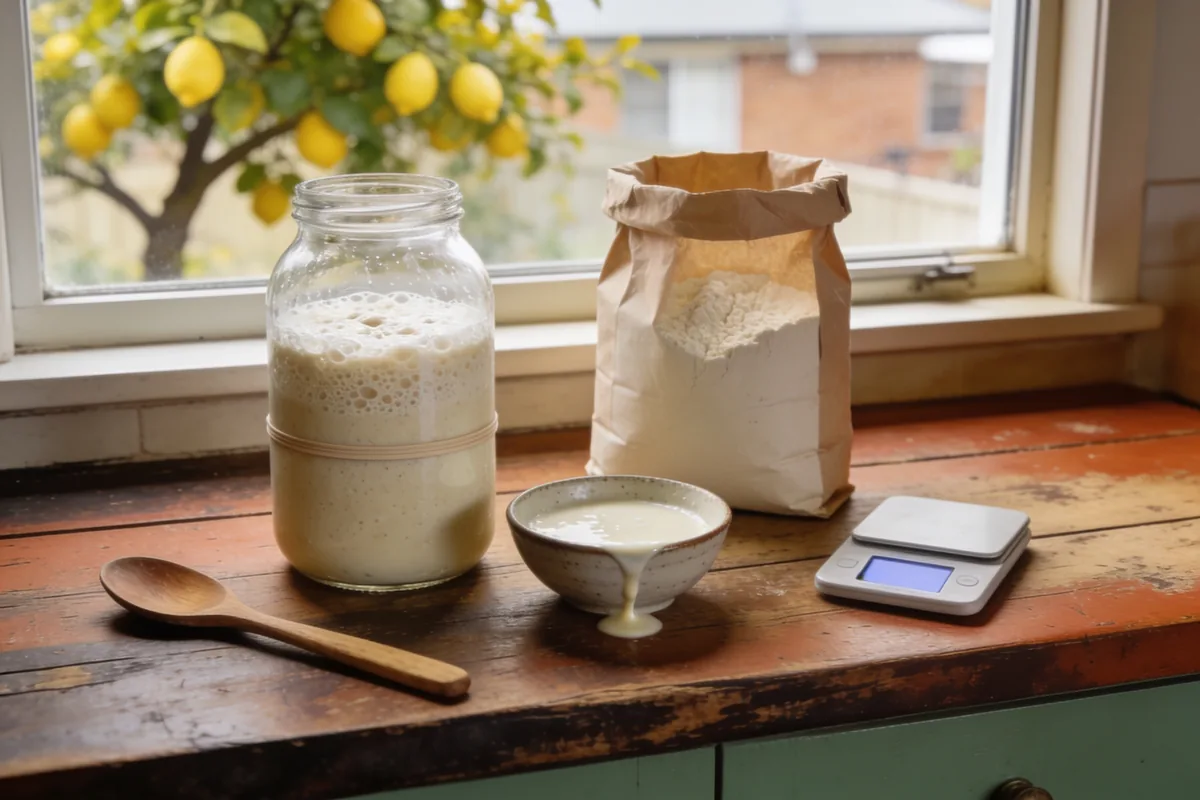
It is a little after seven on a spring morning, and the kitchen still holds the night’s cold, though the light through the window over the sink has already turned the bench a pale gold. A glass jar sits beside the kettle. Three days ago it held nothing but wholemeal flour and tap water, stirred into a grey paste that looked like wallpaper glue. Now bubbles press against the glass, the top has lifted into a loose dome, and when you ease the lid off, the smell is somewhere between plain yoghurt and a cut apple. Something in there is alive.
Then you read the next line of the recipe. It tells you to pour half of it away.
Most people pause here with the spoon in their hand and feel a small pang of waste. Three days of feeding, and the first real instruction is to tip your progress into the bin. It sounds like a ritual passed down without a reason, the sort of thing bakers do because the person who taught them did it too. There is a reason, though, and once you see it the discard stops feeling like a loss. It is mostly arithmetic. The rest is about food.
What is actually in the jar
A starter is flour and water that something has moved into. Wild yeasts and bacteria ferment the flour, and the gas they give off is what fills the paste with bubbles and pushes it up the side of the jar, as Clemson University’s Home and Garden Information Center explains in its guide to sourdough discard. Leavened bread turns up in one form or another across a great many of the world’s kitchens, and if you have ever gone on a journey through diverse cuisines, you have probably eaten bread raised by a jar much like this one.
Not every starter is the same, and in 2021 a group of researchers looked at how they differ. They studied 500 starters gathered from four continents and published the results in the journal eLife. Place, it turned out, mattered less than you might expect. There was little sign that a starter’s location shaped what lived in it; how the starter was made and kept looked more important than where it came from. One group of microbes did stand out. Acetic acid bacteria were linked to a sharper, vinegary aroma and to a slower rise.
If your jar leans towards vinegar and takes its time, that pairing is one the researchers saw.
If you arrived at sourdough because someone told you fermented food is good for you, that is a different question, and a bigger one. Our look at gut health, what the evidence supports and what to be sceptical of is the place to weigh it. This jar has a smaller job. It only has to raise bread.
The arithmetic behind the discard
Clemson’s guide puts the problem in grams, and it is worth following slowly. Say you keep 30 g of starter and feed it 30 g of flour and 30 g of water. Skip the discard, and the next feed starts with 90 g in the jar.
Now picture the morning after that, and the one after that. Each feed has to match the starter it is feeding, so every skipped discard asks for more flour and more water than the one before, and a jar that began with a few spoonfuls is climbing past its shoulder by day four, then over the rim and down the side by day five, leaving you scraping paste off the bench and wondering where the flour went. At that point the starter is running the kitchen.
The second reason comes from King Arthur Baking, whose starter method this piece follows. Keeping the total amount of starter down means each feed brings more fresh food for the yeast. A small starter given a full meal gets busy. A large one given the same meal goes hungry and sluggish, because there is less to go around.
Put the two together and the discard looks less like waste and more like portion control. You are keeping the jar a size you can feed properly.
Day by day, from flour and water
This is King Arthur’s method, in grams, with the Australian names for the flours. You will need a jar, a spoon, flour, water and a set of kitchen scales.
Write the feed times on a scrap of paper and leave it by the jar. Twice-daily feeds blur together quickly, and by day four it is easy to lose track of whether the evening feed happened.
Day 1. Stir 50 g of wholemeal flour (rye works too) into 50 g of water in a clean jar. Cover it loosely and leave it somewhere around 21°C for 24 hours. Do not worry if nothing seems to happen. King Arthur warns that the first day can pass without much sign of life.
Day 2. Weigh out 50 g of the starter and discard the rest. Feed the 50 g you kept with 50 g of plain flour and 50 g of water, stir it well, cover it and leave it in the same warm spot.
Days 3 to 5. Do the same thing twice a day, about 12 hours apart: keep 50 g, discard the rest, feed 50 g of plain flour and 50 g of water. Morning and evening is the easiest rhythm to hold, before work and after dinner.
Ready, or not yet. By the end of day 5, a lively starter will at least double in volume within about 6 to 8 hours of a feed. It will be full of bubbles and smell pleasantly tangy. A rubber band around the jar at the level of the fresh feed makes the rise easy to read. If yours has not got there, keep going through days 6 and 7 on the same routine. On King Arthur’s timetable, then, the answer to how long it takes is five days, with days 6 and 7 held in reserve.
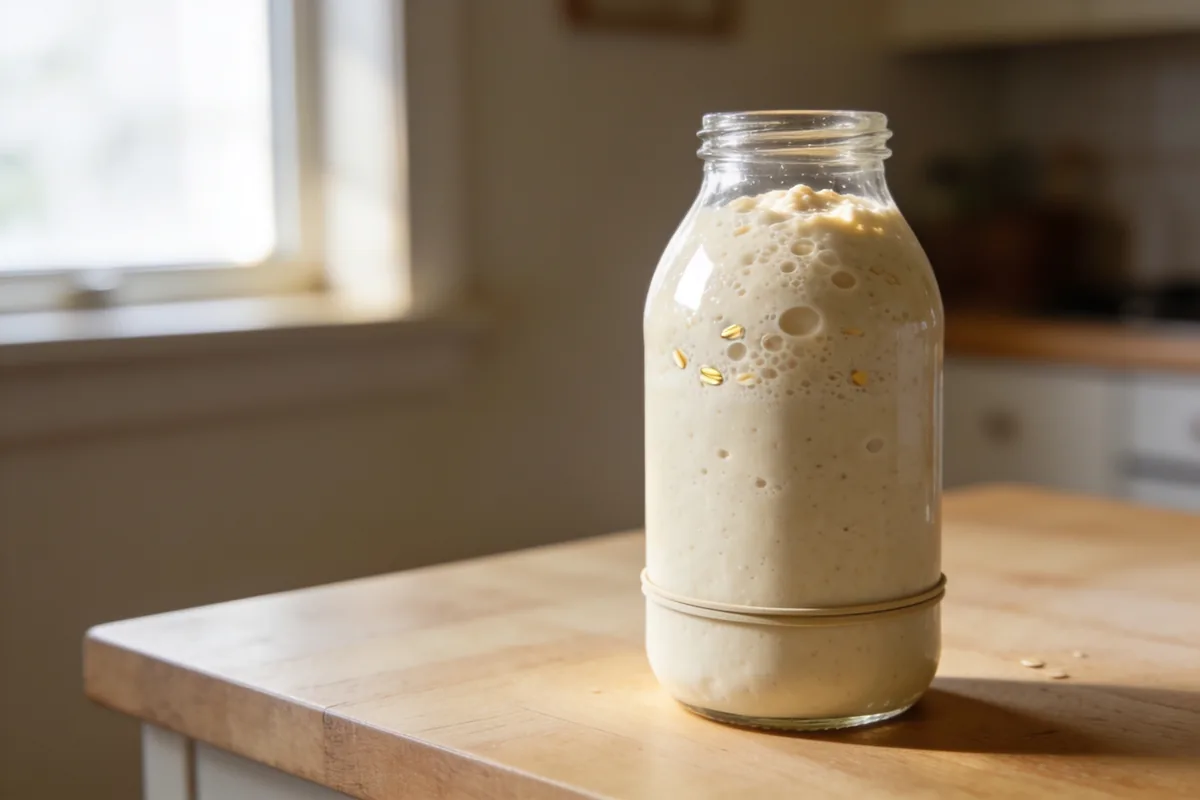
Watching for the rise is the part people remember. You check the band after breakfast, then again at lunch, then lean down to eye level mid-afternoon and see the surface well above it, domed and pocked with bubbles. That is the day the jar stops being an experiment.
Warmth, in an Australian house
Warmth sets the pace. King Arthur puts the ideal range at 21 to 26°C (70 to 78°F), and says that below 20°C (68°F) things slow down, which matters in an Australian spring, when a kitchen can sit cold at dawn and warm up through the afternoon.
A jar beside a cold window on a September morning will move slowly, and it is easy to mistake slow for dead.
King Arthur suggests a couple of warmer spots: inside the oven with only the light switched on, or on top of the fridge. Whichever you choose, check that the starter is not getting too hot. A note taped to the oven door saves it from being baked along with the dinner.
What to do with the half
The first time you do it, it feels wrong. A spoonful of pale, bubbly paste slides off the scales and into a bowl, and it smells just as good as what stays behind.
The half you pour off does not have to go in the bin. King Arthur and Clemson make the same point: it can be given to a friend, or baked into something else. Clemson’s list includes pancakes, crackers, pizza base and cookies. The discard is an ingredient in its own right.
On a slow Sunday morning a bowl of discard becomes a stack of thin, sour-edged pancakes, the batter spreading in the pan and bubbles rising through the tops before you flip them.
It fits into an ordinary week more easily than you would expect, and if you are trying to balance your plate across the week, pancakes and crackers made from discard are one more thing cooked at home from what was already in the kitchen.
There is also a quieter fix. Keep a smaller starter, and there is less to throw away at each feed. A 50 g starter makes far less discard than a jar you have let grow.
When the jar has to go
There is one sign that overrides everything above. If you see mould on a starter, the whole thing goes: not the top layer, not the patch you could scrape away, all of it. The national health advice service, healthdirect, says soft foods like bread should be thrown away if there is any mould at all. A wet, living starter is softer than any loaf in the house. Wash the jar, start again from day one, and treat it as the cost of learning.
What the jar is telling you
It is day five, and the afternoon light has moved round to the other end of the bench. The jar has not moved at all, but everything inside it has: the band you rolled on after the morning feed is well below the surface now, the dome is ridged and glossy, and the smell has softened into something closer to yoghurt than vinegar. You did that with flour, water and a set of scales, and nothing more.
Skip the gadgets. A jar with a loose lid does the job of any purpose-built crock, and a rubber band does the job of any marked container or app. The one habit worth keeping is the dull one: weigh, do not guess. A cup of flour can vary from one scoop to the next, and a starter fed by eye drifts until you no longer know what you are feeding it.
The discard is the jar telling you how much it can use. Pour the rest into the pancake bowl and feed what is left.
Sources: Sourdough Starter recipe, King Arthur Baking (https://www.kingarthurbaking.com/recipes/sourdough-starter-recipe); All About Sourdough Discard: How to Use and Manage Your Starter, Clemson Cooperative Extension HGIC, 2026 (https://hgic.clemson.edu/all-about-sourdough-discard-how-to-use-and-manage-your-starter/); Landis EA, Oliverio AM et al., The diversity and function of sourdough starter microbiomes, eLife, 2021 (https://elifesciences.org/articles/61644); Accidentally eating unsafe foods, healthdirect (https://www.healthdirect.gov.au/amp/article/accidentally-eating-unsafe-foods-ingesting-questionable-foods)


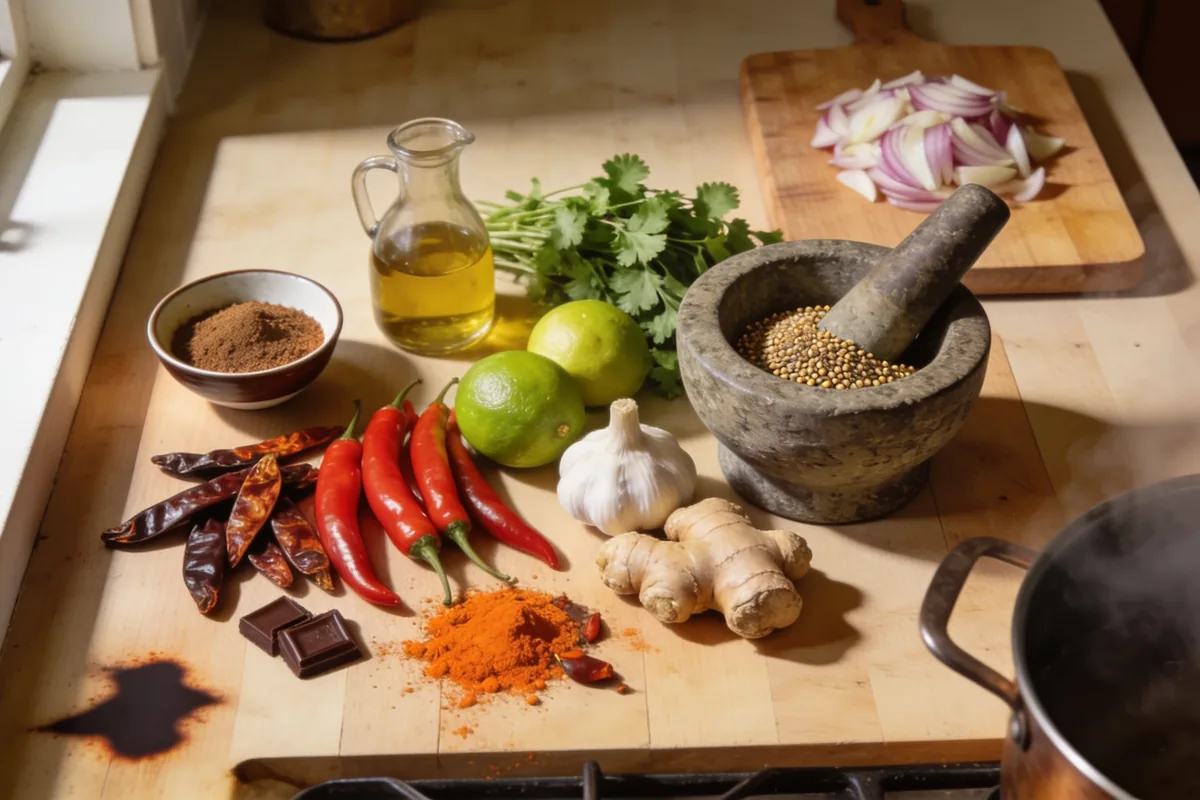
Most people meet another culture first through its food. Long before a visa or a phrasebook, there is a dish: something someone’s grandmother made, adjusted to a new country and a new kitchen, and still recognisably from somewhere else. Learning to cook those dishes is the most practical form of curiosity there is, and it does not require travel. This guide takes the major cuisines in turn and gives each of them three things a reader can act on: one defining technique, one ingredient worth buying, and one dish to cook first.
Why exploring other cuisines is worth the effort
The rewards are concrete. Cooking across cultures broadens what a household understands about the world, introduces ingredients and methods that a single tradition never contains, and encourages more varied eating by making variety interesting rather than dutiful. It also builds creativity in the kitchen, because techniques learned in one cuisine transfer to the next, and it connects a cook to traditions that have been refined by generations rather than by a marketing calendar. The starting point for each cuisine below is deliberately small: one technique, one purchase, one dish.
Asian cuisines
Chinese cuisine
The technique to learn is stir-frying over high heat, with everything chopped and within reach before the wok goes on. The ingredient to buy is a good bottle of soy sauce, or Sichuan peppercorns for the numbing edge the regional cooking is known for. Cook first a plate of stir-fried noodles, then work up to dumplings, hot pot and Peking duck. The regional variety, from Cantonese to Sichuan and Hunan, means a cook can spend years in this cuisine without exhausting it.
Japanese cuisine
The technique is restraint with seasoning: rice cooked properly, ingredients cut cleanly, and a small number of flavours allowed to be themselves. The ingredient to buy is miso, which earns its place in soups, marinades and dressings. Cook first a simple miso soup, then sushi and sashimi, ramen and tempura as confidence grows. A bento meal, assembled from several small preparations, is the best expression of how the cuisine thinks.
Indian cuisine
The technique is tempering: whole spices bloomed in hot fat at the start of a dish, which is what makes the difference between a curry that tastes flat and one that tastes finished. The ingredient to buy is a fresh garam masala, or ghee. Cook first a dal or a butter chicken, then biryani, dosa and paneer curries. The regional spread, from Punjab to Kerala, means the same cuisine contains both the richest and the lightest food on this page.
Thai cuisine
The technique is balancing the four tastes, sweet, sour, salty and spicy, in a single dish rather than in sequence. The ingredient to buy is fish sauce, without which the balance is guesswork, plus a good curry paste. Cook first a green curry, then pad thai, tom yum soup and mango sticky rice. The cooking is fast once the ingredients are assembled, which makes it a good cuisine for a weeknight.
European cuisines
Italian cuisine
The technique is finishing the pasta in the sauce, with a little of the cooking water, so the dish comes together in the pan rather than on the plate. The ingredient to buy is a proper olive oil and a block of parmesan. Cook first a carbonara, then lasagne, risotto and tiramisu. The cuisine’s whole argument is that good ingredients and simplicity beat technique for its own sake.
French cuisine
The technique is the sauce, and the slow braise that produces it. The ingredient to buy is butter, or a wine worth cooking with. Cook first a coq au vin or a ratatouille, then work towards the classics that carry the cuisine’s reputation. What the tradition values is technique and presentation, which is worth learning even if the plate is never quite as tidy at home.
Spanish cuisine
The technique is sofrito: onion, garlic and tomato cooked down as the base of half the dishes in the repertoire. The ingredient to buy is smoked paprika, or saffron for the dishes that call for it. Cook first a paella, then tapas, churros and patatas bravas. The cuisine is built for sharing, and the regional cooking, from Catalonia to the Basque Country, rewards following a region rather than the whole country at once.
Middle Eastern cuisines
The technique is the mezze table: several small dishes, each simple, assembled into a meal that is generous rather than elaborate. The ingredients to buy are tahini, sumac and pomegranate molasses, which between them cover most of what the cooking calls for. Start with hummus and falafel made from scratch, then shawarma, kebabs and baklava. Hospitality is the organising principle of the cuisine, and the table you set is part of the dish.
African cuisines
North African cuisine
The technique is slow cooking in a covered pot, which is what a tagine is for. The ingredient to buy is a ras el hanout or a harissa. Cook first a vegetable tagine and serve it with couscous. The spicing, led by cumin and cinnamon, is warm rather than hot, and it perfumes a kitchen in a way that makes the cooking feel like an event.
West African cuisine
The technique is the one-pot rice, cooked so the liquid carries the flavour through every grain. The ingredient to buy is groundnuts, or a good peanut butter for the stews, plus a chilli for the heat the region is known for. Cook first a jollof rice, then plantains and a peanut stew. The food is bold, generous and built for company.
East African cuisine
The technique is the spiced stew mopped up with flatbread, which is the shape of most meals in the region. The ingredient to buy is berbere, the spice blend that does most of the work. Cook first a lentil stew and serve it with injera or another flatbread. The cuisine is one of the least represented in Western kitchens, which makes it the most rewarding to bring home.
Latin American cuisines
Mexican cuisine
The technique is charring: chillies, tomatoes and onions blackened before they are blended into a salsa. The ingredient to buy is dried chillies, or masa for tortillas made at home. Cook first tacos with a fresh salsa, then mole, which is the dish that shows how deep the cuisine goes. Fresh, spicy and colourful is the shorthand, and the shorthand undersells it.
Brazilian cuisine
The technique is the slow bean stew, simmered until the beans give up their starch to the pot. The ingredient to buy is cassava flour for farofa, or the cuts for a churrasco. Cook first a feijoada, then pão de queijo, the cheese bread that disappears before the meal begins. The cuisine mixes Indigenous, African and European influences, and the stew is where they meet.
Peruvian cuisine
The technique is the citrus cure: fresh fish briefly dressed in lime, which is ceviche and the reason the cuisine has travelled so well. The ingredient to buy is ají amarillo paste, the chilli that gives Peruvian cooking its character. Cook first a ceviche, then lomo saltado, and try the quinoa dishes that have made the grain famous again. It is one of the fastest-growing cuisines in the world, and the reason is the cooking.
Modern fusion cuisine
Fusion is what happens when cooks who know more than one tradition stop keeping them apart, and the results range from the gimmicky to the genuinely good. The pairings with staying power are the ones built on a real overlap: Japanese-Peruvian cooking, born of migration and now a tradition of its own; Korean-Mexican street food, which shares the same instincts about grilled meat and heat; and Mediterranean-Asian plates, where olive oil, herbs and rice meet soy and sesame. The test of a fusion dish is the same as for any other, which is whether it tastes of something specific rather than of an idea.
Bringing the world to your kitchen
The practical method is small and repeatable. Buy one new spice a month, from the list that includes turmeric, paprika, cumin and cardamom, and use it until it is familiar. Cook one new dish each week, chosen from the first-dish suggestions above. Shop at a multicultural grocer, where the prices and the range are both better than the supermarket’s international aisle. Follow cooks from the cuisines that interest you rather than general cooking channels, and take a workshop or visit a food festival when the chance arises.
Two notes for doing this well. Variety is the goal, and where a household is managing a food reaction, it is worth understanding how delayed reactions work before testing ingredient after ingredient. And the structure of the meal does not need reinventing: the plate guide in the beginner's guide to balanced eating works with any cuisine on this page, which is the point of it.
Where to start
Choose one cuisine and cook its first dish this week. The technique will transfer to the next cuisine before long, the shopping list will settle into the pantry, and the travel that began in the kitchen will keep going without a passport. That is how a palette widens: one dish at a time, each of them someone’s home cooking rather than a cuisine in general.

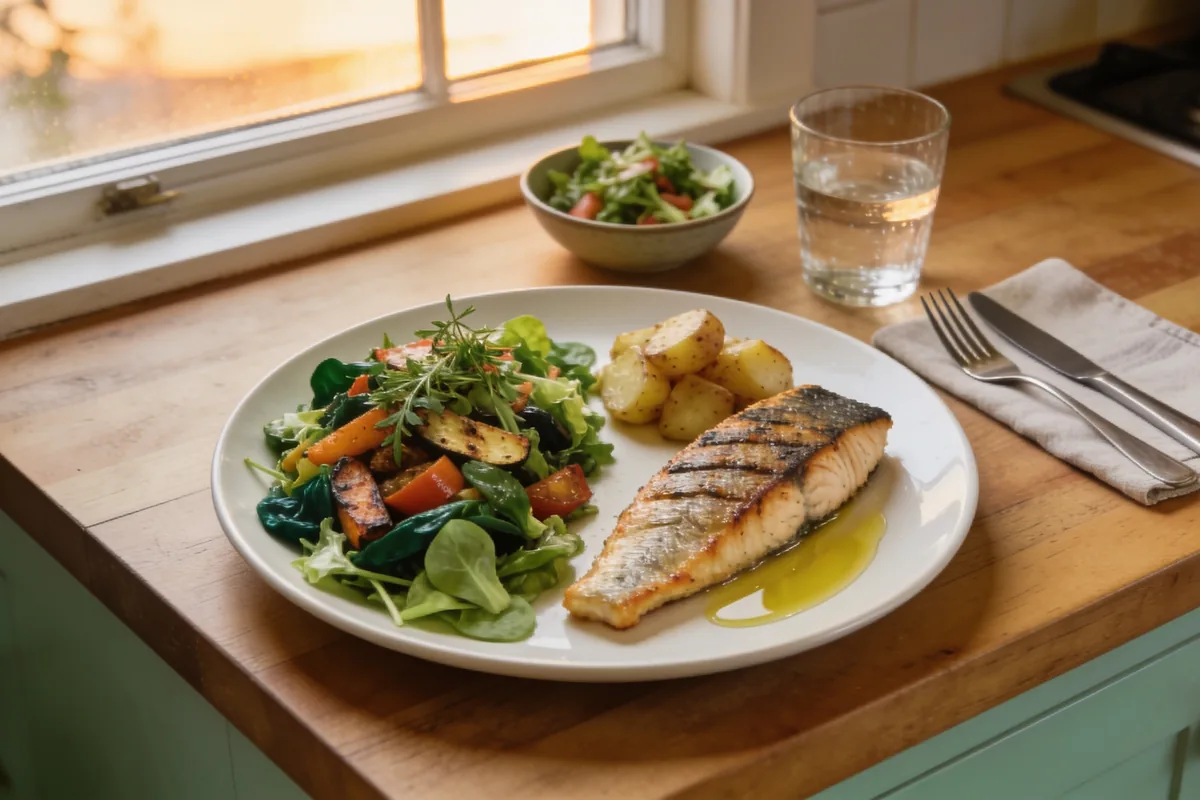
If you’ve ever stood in the kitchen at six in the evening, tired, hungry, and completely unable to remember what “eating well” is supposed to look like, you’re in very good company. Most advice arrives as a list of things to stop doing, which is hard to act on when you just want dinner. This guide takes the other direction. It starts with what a balanced plate looks like, then covers what a portion is without weighing anything, how to do it without meat, what a simple week can look like, and how to tell hunger apart from habit.
What balanced eating means in practice
Balanced eating is not a diet and it is not a set of rules about specific foods. It is a pattern: most of what you eat supports your body, some of it is there for pleasure, and the two overlap more often than the diet industry suggests. The practical version most people find easiest to hold onto is the plate guide.
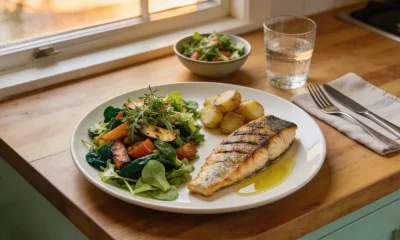
- Half the plate: vegetables and salad, in whatever form you will actually eat them. This is the half that carries the vitamins, the fibre and the volume.
- A quarter of the plate: protein, such as fish, chicken, eggs, legumes or tofu. Protein is what keeps a meal satisfying for longer.
- A quarter of the plate: carbohydrates, such as potatoes, rice, pasta or bread. These are the energy portion, not the enemy portion.
- A small amount of healthy fat: olive oil, nuts, avocado or the oil the food is cooked in. It carries flavour and helps you feel full.
That is the whole structure. It works with a roast dinner, a stir-fry, a curry or a bowl of leftovers, which is the point. If you can picture the four parts, you can build the plate from whatever is in the fridge.
What a portion looks like without weighing anything
You do not need scales to eat well, and for most people the scales make it harder rather than easier. Your hands are a good enough measure, and they travel with you.
A serve of protein is roughly the size and thickness of your palm. A serve of vegetables is a generous handful, or as much as you can comfortably fit on half the plate. A serve of carbohydrates is about a cupped hand. A serve of fat is about a thumb. These are estimates, not prescriptions, and they adjust themselves to you: a larger person has a larger hand.
The doubt worth addressing directly is the one that says this is too vague to work. It is vague, and that is a feature rather than a flaw. Precision is what makes food plans exhausting, and exhaustion is what makes them stop. A rough guide you use every day beats an exact one you abandon by Thursday.
A vegetarian version of the plate
The plate guide works without meat, and the only part that needs thought is the protein quarter. Tofu, tempeh, lentils, chickpeas, beans, eggs and dairy all fill it. So does a combination of grains and legumes across the day, which is how most of the world has always done it.
The small step for this section is to pick two vegetarian proteins you already like and keep them in the house. A tin of chickpeas and a block of firm tofu in the cupboard turn a vegetable stir-fry into a balanced meal on the nights when cooking a proper dinner was never going to happen.
What a simple week can look like
A week of eating well does not need a meal plan with twenty ingredients. It needs a few patterns you can repeat, with enough variety that nobody gets bored.
- Breakfasts rotate between something with protein (eggs, yoghurt, or toast with a spread of nut butter) and something quick (oats, fruit, or last night’s leftovers if that is what you like).
- Lunches are often dinner from the night before, which is the single most useful habit in this article.
- Dinners follow the plate: a protein, a carbohydrate and at least one vegetable, cooked in a way you enjoy. A stir-fry, a tray bake, a curry, a soup with bread, a bowl of pasta with a big salad on the side.
- One or two meals a week are planned by someone else, whether that is a takeaway, a friend’s kitchen or a packet, because a pattern that cannot include a night off will not survive.
The point is not the meals themselves. It is that a small number of repeatable patterns removes most of the daily decision-making, and the decision-making is what usually wears people down.
How to tell hunger from habit
Eating when you are not hungry is not a failure of character. It is usually a habit, a feeling or a cue, and habits respond to noticing rather than to willpower.
Physical hunger builds gradually and feels like it is in the body. It is willing to wait a little, and most foods will do. Habit hunger arrives suddenly, wants one specific thing, and often shows up at a time of day rather than a level of emptiness: after the kids are down, in front of the television, or with a cuppa because that is simply when it is.
The one small step here is a pause, not a rule. When you notice the urge, wait ten minutes and have a glass of water. If you are still hungry, eat, and enjoy it. If the urge passes, you have learned something about that moment of your day, which is more useful than any amount of guilt about it.
Where balance slips quietly
Two places undo more balanced plates than any other: drinks and snacks. Neither is a meal, so neither gets the plate treatment, and both can carry more sugar than anything on the actual dinner table. A soft drink with lunch, a biscuit with every cup of tea, the handfuls that do not count because they were eaten standing up: none of it is a crime, and all of it adds up outside the system you are trying to build.
The fix is not to ban anything, because bans are what make these things appealing in the first place. It is to give the drinks and snacks a place in the picture. Water most of the time, the other drinks as a choice rather than a habit. Snacks that carry something with them, like fruit, nuts or yoghurt, rather than snacks that are gone in four bites and leave you looking for more.
The small step for this one is to pick a single drink to change, and only that. Swap one daily soft drink for water or soda water, keep everything else as it was, and see how it feels after a fortnight. That is a smaller change than most people attempt and a more likely one to still be true in a month.
When food seems to be affecting how you feel
Sometimes the link between what you eat and how you feel is not about balance at all. Some reactions to food are delayed, showing up hours later and never appearing on a standard allergy test, which is why people are so often told that nothing is wrong. If you have noticed a pattern between a certain food and symptoms such as bloating, headaches or skin changes, that is worth taking to a professional rather than guessing at: the reactions that hide have a proper way of being investigated, and the investigation is more reliable than an elimination diet run alone.
A small step to start with
You don’t need to change everything on Monday. Pick one meal tomorrow and build it on the plate guide, using whatever you were going to eat anyway. Then do it again the next day. Balance is a habit built from ordinary meals, not a project with an end date, and one plate is a perfectly good place to begin.


 Healthcare1 year ago
Supported Independent Living Explained: What SIL Covers and Who It Suits
- Food1 year ago
Balance Your Plate, Boost Your Mood: Beginner’s Guide to Eating Well
- Healthcare1 year ago
Oral Health at Every Age: What Changes and What to Watch For
- Healthcare1 year ago
The Allergy You Can’t See: How to Detect and Manage Silent Food Reactions
- Healthcare1 year ago
Occupational Therapy for Children: The Signs It Could Help, and How to Start
- Business1 year ago
Connections That Count: Why Networking Is Still Crucial for Business Success
- Healthcare1 year ago
Home and Living Support Under the NDIS: What It Funds and How It Fits a Plan
- Healthcare1 year ago
Tired of Plantar Fasciitis Pain? Shockwave Therapy Could Help You Get Back on Your Feet