Home & Garden
Tomatoes on Melbourne Cup Day: Where the Old Rule Holds, and Where It Is Late

So you’ve got a punnet of tomato seedlings on the back step, the weather has turned mild, and somebody has already told you to wait for Melbourne Cup Day. Maybe it was your nan, maybe a neighbour over the fence. Almost everyone has someone who swears by it, and you might be wondering whether it’s wisdom or just habit.
It’s a bit of both, and that’s good news. The Cup Day rule has a real reason underneath it, and once you know the reason you can work out whether the date suits your garden. This year Melbourne Cup Day falls on Tuesday 3 November 2026, according to Business Victoria. Whether that’s the right day for you depends far more on your soil and your last frost than on a horse race.
What the rule is really protecting
Tomato seedlings are frost tender. A cold night that leaves a hardy winter crop untouched can blacken a young tomato plant, and that’s the loss the old rule was built to prevent. Gardeners picked a date late enough in spring that frost had usually passed, and the Cup was a date everyone remembered.
Here’s the part that surprises people. You don’t need a reading of zero on the thermometer to get frost. ABC reporting on frost explains that it can form when the air is a little above 0 degrees, depending on humidity and cloud cover. A clear, still night can catch you out even when the forecast low looks safe enough.
The other half of the story is the soil. Gardening Australia’s guidance is that soil should be at least 16 degrees for tomatoes, with 18 to 20 degrees better still, and that you should plant after the latest chance of frost, which in cold areas is usually the first week of November. So there are really two tests, and the date on the calendar is only a rough stand-in for both of them.
Spring warming is gradual, and you can see it all around the garden. The same lengthening days that bring a winter-battered lawn back to green are slowly warming your vegie bed from the top down.
One small step for this week: check the forecast overnight lows for the next seven days, and notice how clear and still the nights are meant to be.
Melbourne and cool Victoria: the rule mostly holds
If you garden in Melbourne, your nan was largely right. Early November sits after the frost risk for most of the city, and by then the soil in a sunny bed has usually had time to warm. Planting on or around Cup Day is a sensible, low-fuss choice for a lot of Melbourne gardens.
That said, Victoria isn’t one climate. Colder inland towns and hill areas can stay frosty later into spring than the suburbs near the bay, so if you’re up in the ranges or out on a cold plain, you may need to wait a little longer. That’s fine, and it isn’t a sign you’re doing anything wrong. Waiting for your own conditions is exactly what the rule was trying to teach in the first place.
It can help to think of the year as a calendar of small jobs. In the same way that there’s a right time for what to prune in June, there’s a right window for tomatoes, and it’s set by the conditions rather than a fixed date.
One small step: push a soil thermometer into the bed where the tomatoes will go, and read it in the morning for a few days running. When it’s sitting at 16 degrees or more, you’re in business.
Canberra: slightly early
If you’re in Canberra, the rule needs a gentle adjustment. ABC News looked at Canberra frost data going back to 1940 and found that the final morning of potential frost has fallen, on average, two days after Melbourne Cup Day. So planting on the day itself means planting just before the average last frost.
The same analysis went further, and it’s worth laying the numbers out as choices rather than rules:
- About two days after Cup Day: the average final frost. Planting here is a coin toss on whether a cold morning is still coming.
- 17 days after Cup Day: the point at which you can be 80 per cent confident of avoiding frosty nights. The ABC nicknamed this “Tomato Friday”.
- 43 days after Cup Day: 95 per cent confidence, which takes you well into December.
None of these is wrong. It comes down to how much risk you’re comfortable with and how much effort you’ll put into protecting the plants. If you don’t mind throwing a cover over seedlings on a cold night, an earlier start is fine. If you’d rather plant and forget, waiting for Tomato Friday is the calmer path.
One small step: if you plant in early November, keep something to cover your seedlings handy right through the month, and check the forecast each evening.
Brisbane and the subtropics: late
In Brisbane, it’s a different story, and you may be relieved to hear that you haven’t missed anything by ignoring the Cup. The thing to watch there is the heat. By November, the heat and humidity are building, and with them comes more pressure from pests and disease, which tomatoes don’t love.
The general warm-climate pattern is to plant earlier, from late winter to early spring, and again in autumn, so the plants do their main growing in milder weather. If you’re reading this in late October in Brisbane with no tomatoes in yet, you haven’t failed. You might simply be looking at an autumn crop instead.
One small step: if you’re in the subtropics, jot down a reminder for late summer to plan an autumn planting, and give this spring’s bed to something that enjoys the heat.
Planting well on the day
Whenever your day comes, the way you plant matters as much as the date. Gardening Australia recommends planting tomatoes deep. You bury the stem so that only the top leaves sit above the soil, and you take off any leaves that would end up underground. Roots then form along the buried stem.
It feels a little odd the first time, burying most of a seedling you’ve been nursing along. If yours have gone tall and leggy on the windowsill, though, this is good news, because the stretched stem is the part that goes underground.
Light is the other big need. Gardening Australia suggests a spot in full sun, about seven hours a day in cool areas. If your yard is shady, the sunniest spot you have is worth more than the richest soil in a dim corner. A raised garden bed can help here too, because you get to put it wherever the sun falls longest.
One small step: on planting day, dig each hole deeper than feels natural, strip the lower leaves, and water the seedlings in well.
If you’ve already planted early
Maybe the sun came out in mid-October and you couldn’t help yourself. That’s completely understandable, and it isn’t a disaster. Plenty of early tomatoes come through fine with a little care on the nights that matter.
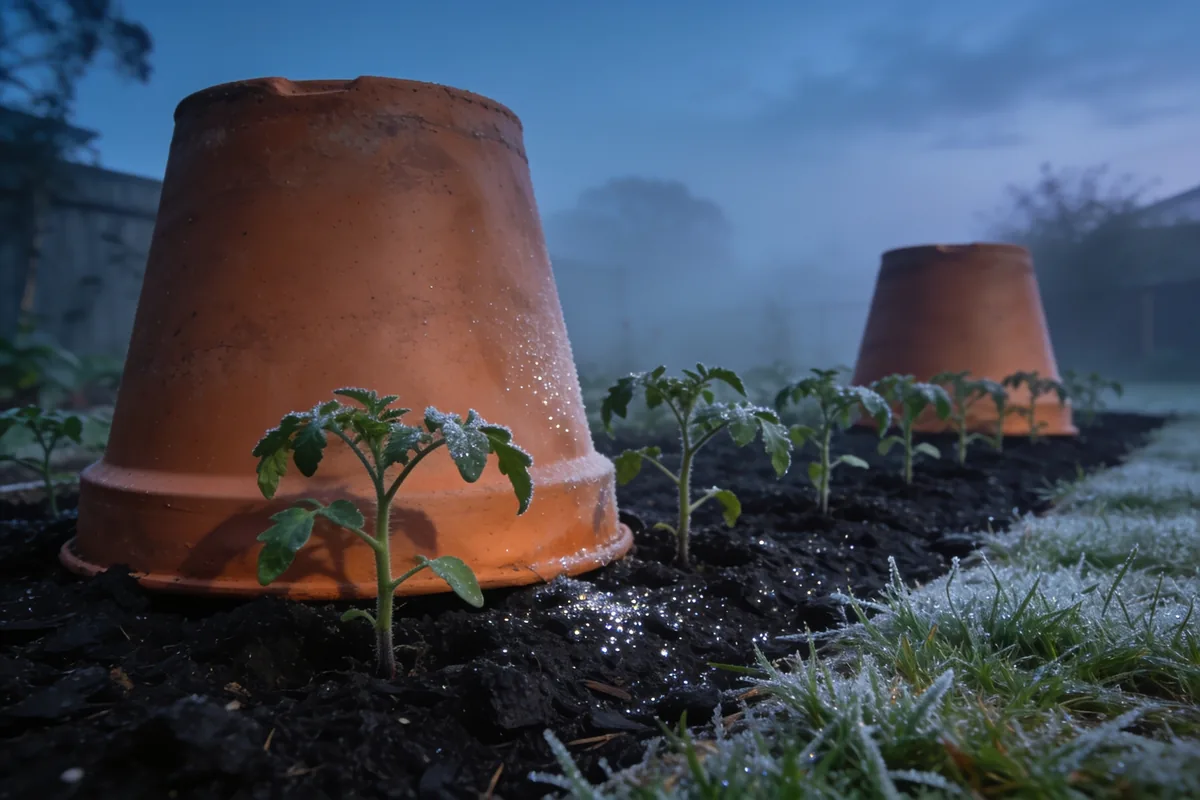

The main thing is to protect them on cold, clear nights. A simple cover over each plant in the evening keeps the worst of the chill off, and you lift it off in the morning so the seedling gets the sun. Watch the forecast, and pay most attention to nights with no cloud and no wind, which are the ones most likely to bring frost.
And if a seedling does get hit and doesn’t come good, try not to be hard on yourself. In cool areas Gardening Australia puts the usual planting time in the first week of November anyway, so a replacement planted then is right on schedule.
One small step: find your covers now and keep them by the back door, so you’re not hunting for them at nine o’clock on a frosty night.
A few questions people ask over the fence
“It’s late October in Melbourne. Can I plant out now?” You might well be able to, and it’s a fair question to ask. Rather than counting days to the Cup, run the two tests. Is the soil in the bed reading 16 degrees or more in the morning? Is the week ahead free of clear, still, cold nights? If both answers are yes, planting a little before the race is unlikely to hurt, as long as you keep a cover handy for the odd chilly evening.
“My seedlings have gone tall and floppy. Have I ruined them?” Not at all. It happens a lot with seedlings raised on a windowsill. Gardening Australia’s deep-planting method suits leggy plants nicely, because the long stem goes underground, the buried leaves come off, and roots form along it.
“I’ve always planted on Cup Day in Canberra and it’s been fine.” That’s genuinely worth something, and nobody is saying you’ve been doing it wrong. On the ABC’s numbers, though, Cup Day sits just before the average final frost. So some years you’ll have planted after the last cold morning, and some years one may still have been on its way. If you’ve never lost a plant, your garden might simply be a little sheltered, or you’ve been lucky with the weather.
“How cold does it have to get for frost?” Not as cold as you’d think. The ABC explains frost can form when the air is a little above 0 degrees, depending on humidity and cloud. A forecast low of a couple of degrees on a clear, windless night deserves a cover.
One small step: write your soil reading and the overnight low on the calendar each morning this week. By the weekend you’ll have your own answer.
Plant by the soil, not the race
The Cup Day rule is a handy reminder that has stuck around because it often gets the timing roughly right, especially in Melbourne. It just isn’t the reason. The reasons are frost and soil warmth, and both of those you can check for yourself.
So here’s the gentle version to take back out to the garden. In cool Victoria, Cup Day is usually a good bet. In Canberra, a little later is safer, and how much later is your call. In Brisbane, the main spring planting is earlier and there’s another chance in autumn. Wherever you are, a soil thermometer reading of 16 degrees or more and a forecast clear of frost tell you more than any date on the calendar.
And if you get it a bit wrong this year, the tomatoes will forgive you. There’s always next spring.
Sources: Top Tomato Tips, Gardening Australia, ABC (https://www.abc.net.au/gardening/how-to/top-tomato-tips/13618668); Heaters on after Anzac Day and tomatoes in after Melbourne Cup? Frost data suggests Canberra folklore is wrong, ABC News (https://www.abc.net.au/news/2023-07-12/frost-data-suggests-canberra-folklore-is-wrong/102590452); Victorian public holidays 2026, Business Victoria (https://business.vic.gov.au/business-information/public-holidays/victorian-public-holidays-2026)